
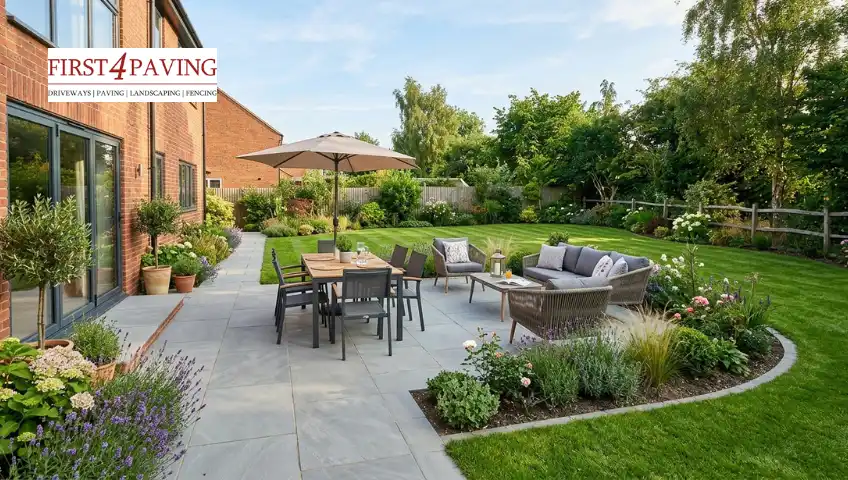
A new patio can completely change the way you use your garden. Whether you want a quiet corner for your morning coffee or a proper space for summer get-togethers, it is one of the best investments you can make at home.
Before anything else, most homeowners want a straight answer: what will this actually cost me? And that is a fair question. Prices vary quite a bit depending on the size of your space, the materials you choose, and who you hire to do the work. A small, simple patio will look very different on your invoice compared to a larger, premium design.
In this guide, we break down every factor that affects the price, from materials and labour to the smaller costs that are easy to overlook. By the end, you will have a clear and realistic budget in mind, with no surprises along the way.
What Factors Affect the Overall Price?
When you start planning your patio installation, it helps to understand what drives costs up or down. The total price of a patio project is usually made up of these key elements:
- Size of the Area: A larger space needs more materials and takes longer to build, which increases both material and labour expenses.
- Choice of Materials: Basic concrete slabs are far cheaper than Indian sandstone or porcelain tiles. Your material choice has the single biggest impact on the final bill.
- Ground Preparation: A flat, grassy garden is straightforward to clear. An uneven or sloped garden, or one with old concrete to remove, will require extra preparation work and add to costs.
- Location and Labour: Hiring tradespeople in London and the South East typically costs more than in northern England or other regions.
Average Installation Cost by Patio Size
The table below gives a rough guide to what you might spend on a typical patio, including both materials and professional labour:
| Patio Size | Approximate Dimensions | Estimated Cost Range |
| Small | 3m x 3m (9 sq metres) | £800 – £1,800 |
| Medium | 5m x 4m (20 sq metres) | £2,000 – £4,500 |
| Large | 6m x 5m (30 sq metres) | £3,500 – £7,000+ |
If your budget is tight, a smaller project is much easier to manage. For a larger garden with premium finishes, total costs can climb above £8,000.
Breaking Down the Cost of Patio Materials
The material you choose is the biggest factor in the final price tag. Let’s look at the most common options for a new patio cost so you can find the right match for your budget.
1. Concrete Slabs (Low Cost)
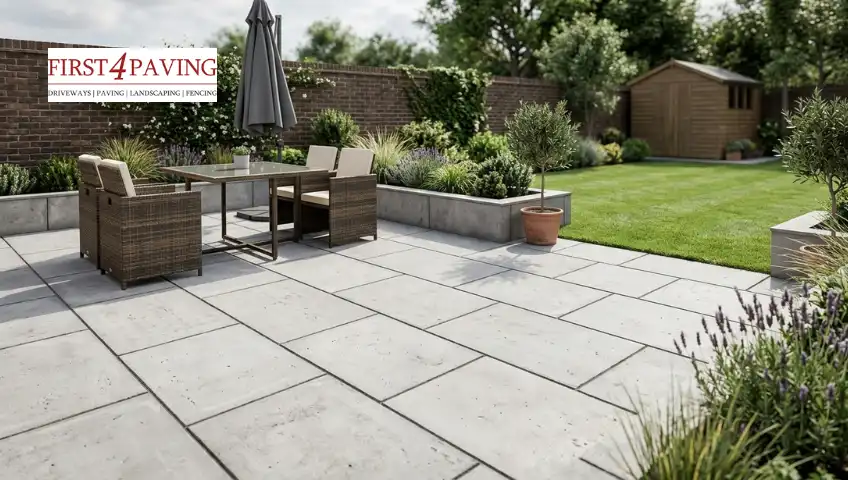
If you want a low-cost patio, standard concrete flags are your best bet. They are tough, practical, and budget-friendly. While they might look a bit plain compared to stone, they do the job perfectly.
- Estimated price: £35 to £60 per square metre.
2. Block Paving (Mid-Range)
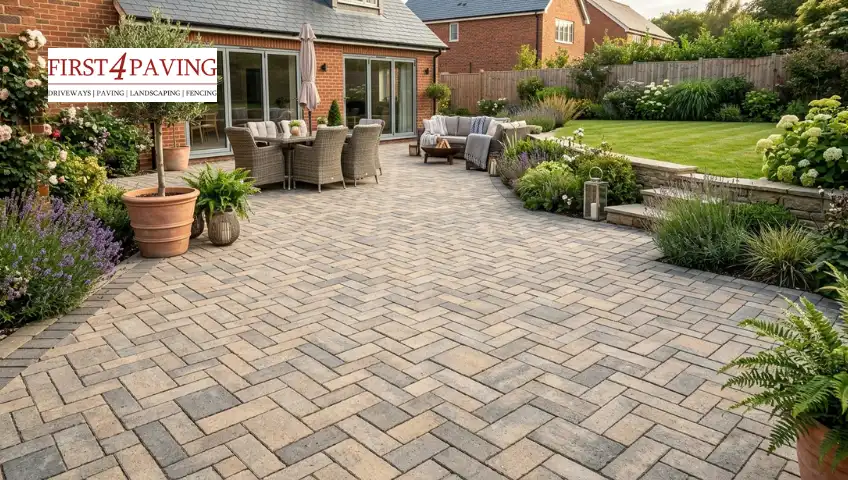
Choosing block paving gives you lots of design options. You can lay them in different patterns, like herringbone, making it a popular choice for both patios and block paving driveways. If budget is a concern, it’s worth comparing this against the cheapest driveway options available.
- Estimated price: £50 to £90 per square metre.
3. Natural Stone (Premium)
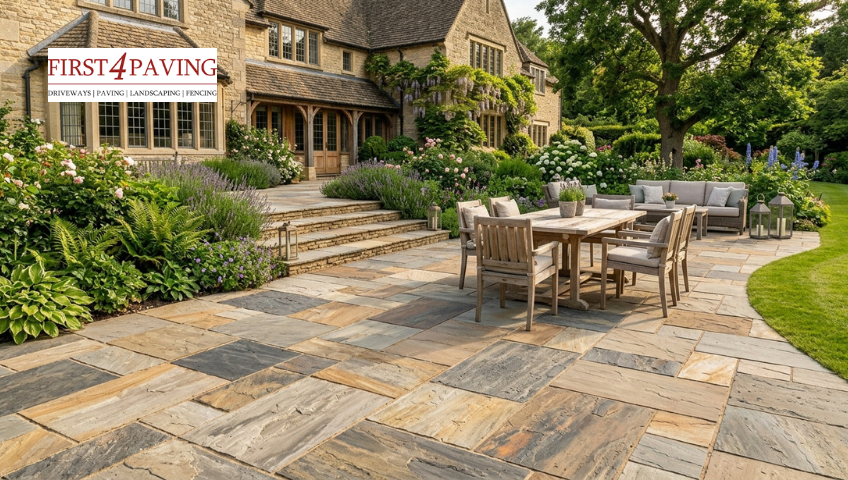
Materials like Indian sandstone, limestone, or slate offer a beautiful, high-end finish. The cost of garden paving using natural stone is higher, but every single slab looks unique, which adds a lot of charm to your home.
- Estimated price: £75 to £130 per square metre.
4. Porcelain Tiles (Luxury)
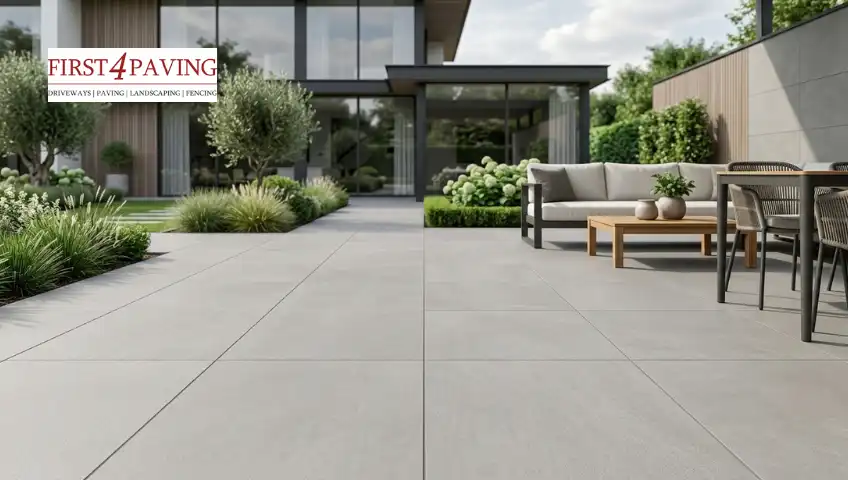
Porcelain is highly fashionable right now. It looks incredibly modern, is scratch-resistant, and does not absorb water, making it easy to clean. However, the patio paving cost for porcelain is top-tier because it requires special tools to cut and lay.
- Estimated price: £90 to £150+ per square metre.
Labour Costs: How Much to Get a Patio Laid?
Unless you are a DIY expert, you will likely need to hire someone experienced who can handle everything from ground preparation to the final finish. But how much does it cost to build a patio when you factor in the workforce?
On average, a landscape gardener or builder charges between £150 and £250 per day per person. Most jobs require at least two workers. Therefore, the daily patio installation cost for labour alone will sit around £300 to £500.
- A small patio usually takes 1 to 2 days.
- A medium patio takes about 3 to 4 days.
- A large or complex patio can take a week or more.
When you ask for patio quotes, always check if the price includes digging up the ground, removing the old waste (like skip hire), and supplying the hardcore base materials.
Hidden or Additional Costs to Consider
When working out the cost of patio installation, it is easy to forget about the extra details. Here are a few things that can alter your final bill:
- Drainage: Water must flow away from your house. If your garden retains water, you might need to install extra patio drainage channels.
- Steps and Walling: If your garden slopes, you may need steps or retaining walls, which is where professional landscaping work comes in and adds to the overall cost.
- Skip Hire and Waste Removal: Digging up your garden creates a surprising amount of waste. If your contractor does not include skip hire in their quote, you may need to arrange and pay for it separately, which can add to your overall bill.
How to Save Money on Your Patio
If you are worried about the cost of laying a patio, there are a few clever ways to keep expenses down:
- Clear the Area Yourself: You can lower the patio laying cost by doing the hard work early. Dig up the old grass and clear away plants before the workers arrive.
- Choose Simple Shapes: Avoid curves or weird angles. Square or rectangular designs mean fewer cuts, less waste, and lower costs.
- Buy Materials in Bulk: If you are buying your own patio supplies, look for trade discounts or end-of-season sales at local builders’ merchants.
Conclusion
Planning a patio does not need to be complicated, but understanding what drives the cost will help you budget realistically and avoid surprises. Material choice is the biggest variable, while ground conditions, garden size, and location all play a role in the final figure.
The best approach is to get a proper quote from an experienced paving contractor, ask exactly what is covered, and decide on your materials before work begins. With a little preparation, you can create a stylish, long-lasting outdoor space that adds real value to your home.
FAQS
1. How much does it cost to lay a patio in the UK?
Professional patio installation in the UK generally costs between £50 and £150 per square metre, depending on the material chosen and the job’s complexity. Concrete is at the lower end, while natural stone and porcelain sit at the higher end. Your location and the amount of ground preparation needed will also affect the final price.
2. Which patio materials are the most affordable?
Concrete slabs are the most budget-friendly option, offering durability at a low cost. Gravel is another economical choice, though it requires more maintenance over time. Block paving sits in the mid-range and offers a good balance between cost and appearance. Natural stone and porcelain are the most expensive materials.
3. Can I install a patio myself to save money?
Yes, a DIY installation can save a significant amount on labour. However, it requires careful planning, the right tools, and a properly compacted base to avoid uneven settling over time. If the groundwork is not done correctly, the surface may shift or crack within a few seasons.
4. How long does it take to lay a new patio?
A small patio laid by professionals typically takes one to two days. Medium-sized projects usually take three to four days, while larger or more detailed designs may take a week or longer. DIY installations will generally take more time, particularly if you are new to the process.
5. Can I use a patio cost calculator?
Yes, an online cost calculator can give you a useful starting estimate based on your size, chosen material, and location. Keep in mind that these figures are approximate. A proper quote from a contractor after a site visit will always be more accurate, as it accounts for ground conditions and any specific requirements of your project.