
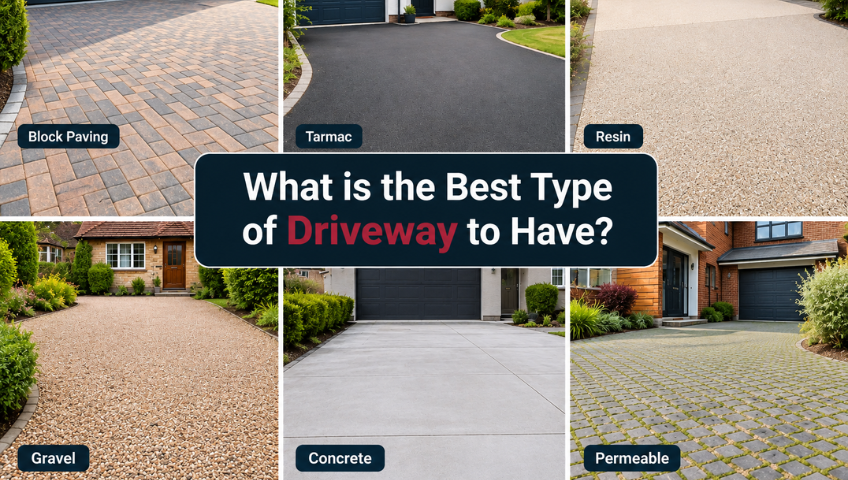
Block paving is the best all-round driveway for most UK homes because it is durable, repairable and attractive, with permeable options available.
Tarmac is a practical budget choice, resin offers a sleek modern finish, gravel suits larger drives and tighter budgets, while concrete is hard-wearing and low-maintenance.
The right option ultimately depends on your budget, usage, drainage needs and preferred look.
Why There Is No Single “Best” Driveway
Ask ten homeowners, and you’ll get ten answers, because a driveway has to do several jobs at once. It has to cope with your cars, survive British weather, look good with your house, drain properly and stay within budget. The right driveway for a terraced house in Enfield with one car is not necessarily right for a long country drive in Hertfordshire.
Here is how each of the main options compares.
1. Block Paving
Block paving is the most popular choice for UK homeowners, and for good reason.
Pros
- Very strong and handles heavy vehicles well
- Wide choice of colours, patterns and finishes
- Easy to repair: lift and replace individual blocks instead of resurfacing the whole drive
- Permeable versions available that allow water to drain through the joints
- Adds kerb appeal and can improve property value
Cons
- Higher upfront cost than tarmac or gravel
- Weeds and moss can grow in the joints without sealing and maintenance
- Needs a properly prepared sub-base, otherwise it can sink or shift
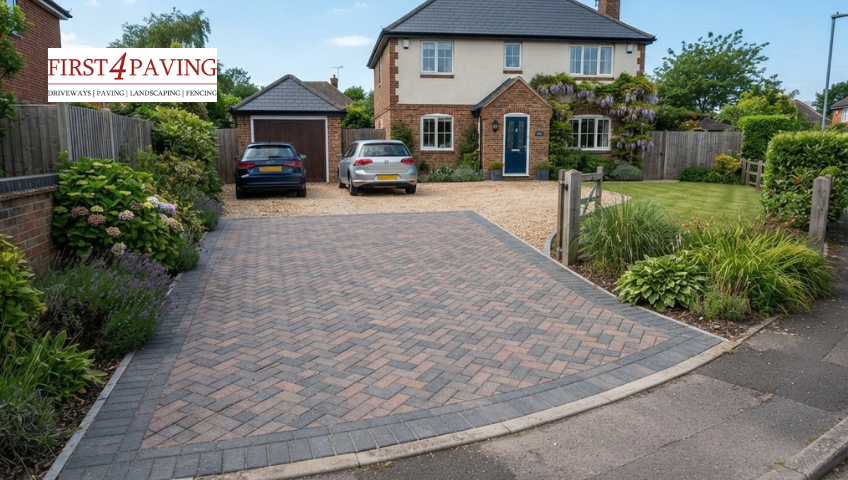
Best for: homeowners who want a long-term, high-quality finish.
2. Tarmac (Asphalt)
Tarmac is a practical, hard-wearing surface that has been used on British drives for decades.
Pros
- Usually the cheapest hard surface
- Quick to install, often within a day or two
- Smooth and flexible, so it copes with movement and temperature changes
- Can last up to 20 years with proper care
Cons
- Plain appearance compared with block paving or resin
- Can soften in extreme heat and can be marked by heavy loads
- Needs re-sealing every few years to keep its colour and protect against oil and water
- Repairs can show as patches
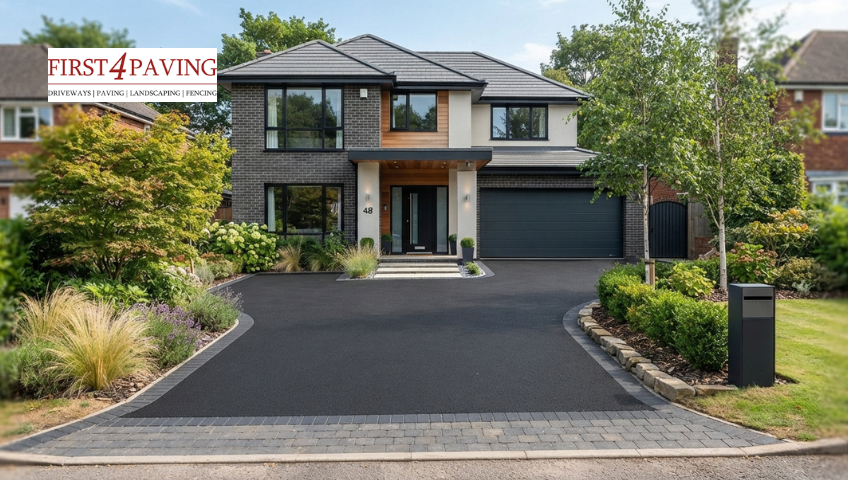
Best for: large drives, budget-conscious homeowners and anyone who wants a no-fuss surface.
Weighing it up against block paving? See our block paving vs tarmac comparison.
3. Resin-Bound Driveways
Resin-bound surfaces mix natural aggregate with clear resin to create a smooth, seamless finish.
Pros
- Modern, clean look with a wide range of colours
- Permeable, so water drains straight through
- No loose stones, and weeds struggle to grow through
- Low maintenance
Cons
- More expensive than tarmac and gravel
- Needs a strong, stable base and skilled installation
- Hard to repair invisibly if damaged
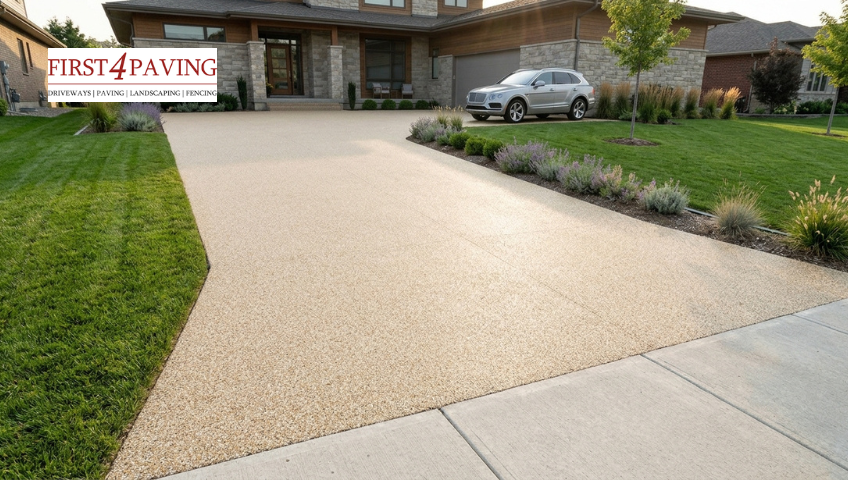
Best for: contemporary homes and anyone who wants a premium finish. Make sure you ask for resin-bound, not resin-bonded, which has a loose top layer and is usually not permeable.
4. Gravel and Shingle
Pros
- Cheapest to install
- Natural, traditional look
- Permeable by nature
- The crunch underfoot is a good low-tech security alert
Cons
- Stones spread and need regular raking and top-ups
- Hard to push a wheelchair, pram or bike over
- Weeds need controlling, and a good membrane and edging are essential
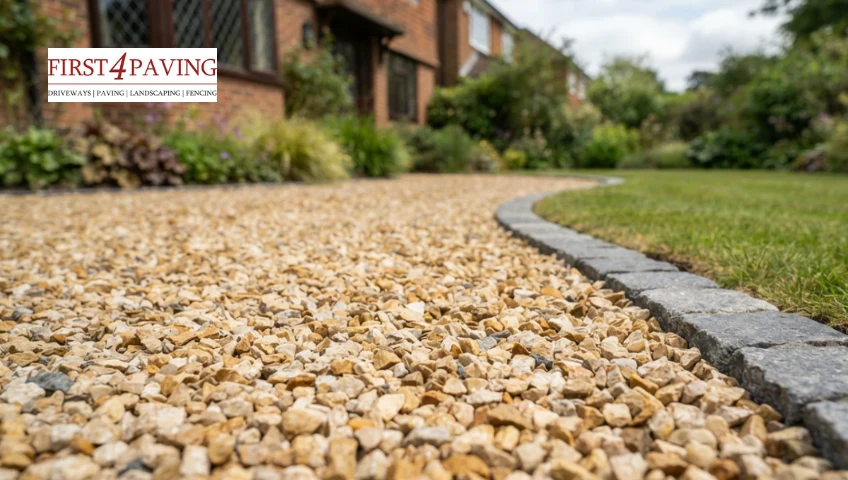
Best for: large or rural properties, or as a budget-friendly option.
5. Concrete and Imprinted Concrete
Pros
- Very strong and long-lasting
- Imprinted or stamped versions can mimic brick, slate or stone
- Low maintenance once laid
Cons
- Can crack with ground movement or poor installation
- Repairs are visible
- Colour can fade over time
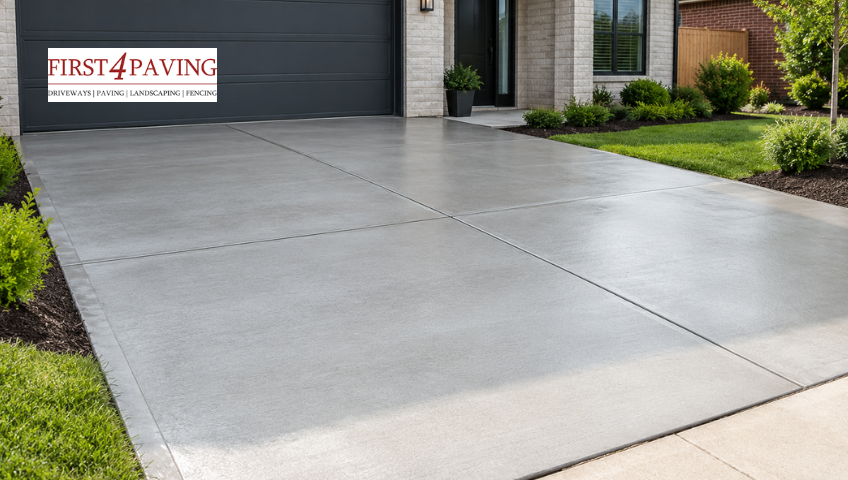
Best for: homeowners who want a robust, simple surface.
How Much Does Each Driveway Type Cost?
Prices vary by region, access, size and preparation work, so treat these as rough guides only and always get a written quote.
| Driveway Type | Estimated Enfield Cost / m² | Lifespan | Maintenance |
|---|---|---|---|
| Gravel / shingle | £40–£70 | 10–20 years with top-ups | Medium |
| Tarmac | £55–£100 | 15–20 years | Low to Medium |
| Concrete | £70–£125 | 25+ years | Low |
| Block paving | £95–£150 | 20–30 years | Medium |
| Resin-bound | £100–£160 | 15–25 years | Low |
Prices are estimates based on UK averages adjusted for Greater London. Your exact cost depends on driveway size, access and preparation. Get a free fixed quote
The surface you see is only part of the cost. A proper sub-base, edging, drainage and ground preparation often make the difference between a drive that lasts 20 years and one that fails in five.
Drainage and Planning Rules You Need to Know
In England, if you pave a front garden with an impermeable surface larger than 5 square metres, you generally need planning permission unless the rainwater drains to a lawn, border or other permeable area, or the surface itself is permeable. This is why permeable block paving, resin-bound and gravel are so popular. Rules can vary by council, conservation area and Scotland, Wales and Northern Ireland, so check with your local authority before you start. If you need to drop a kerb to create vehicle access, you will usually need separate permission from your council.
How to Choose the Right Driveway: Five Questions
- What is my budget? Set a realistic figure, including preparation and drainage.
- How big is the area? Large areas favour tarmac or gravel on cost.
- What will drive on it? Heavy vehicles need a strong base and a robust surface.
- What look suits my home? Match the surface to your property’s style and street.
- How much maintenance am I happy with? Gravel needs raking, block paving needs occasional cleaning and sealing, resin needs very little.
Why Installation Quality Matters More Than Material
Even the best material will fail if it is laid badly. Look for:
- A correctly compacted sub-base of suitable depth
- Proper falls so water runs away from your house
- Quality edging and restraints
- A written quote, a guarantee and verifiable reviews or trade accreditations
- Clear details on what is and isn’t included
If you’re curious what a proper installation involves, our step-by-step guide to laying a block paving driveway covers the sub-base, edging and jointing in detail.
Conclusion
For most homeowners, block paving is the best all-round driveway thanks to its strength, appearance, repairability and permeable options. If budget is the priority, tarmac offers excellent value and up to 20 years of service. For a sleek, modern finish, resin-bound is hard to beat.
Get a Free Driveway Quote
Not sure which surface suits your property? First 4 Paving installs block paving, tarmac, resin and gravel driveways across Enfield, Greater London and Hertfordshire. We can help you choose an option that suits your home and budget.
FAQs
What is the longest-lasting driveway?
Properly laid block paving and concrete can last 25 years or more. Tarmac can last up to 20 years with good maintenance.
What is the cheapest driveway to install?
Gravel is usually the cheapest, followed by tarmac.
What is the lowest-maintenance driveway?
Resin-bound and concrete need the least upkeep. Tarmac needs occasional re-sealing.
Does a new driveway add value to my home?
A well-designed, well-built driveway improves kerb appeal and practicality, which can make a property more attractive to buyers. The exact uplift depends on your area and property.
Is block paving better than tarmac?
Block paving is generally better looking, more repairable and more flexible in design. Tarmac is cheaper and faster to lay. Which is better depends on your priorities.