
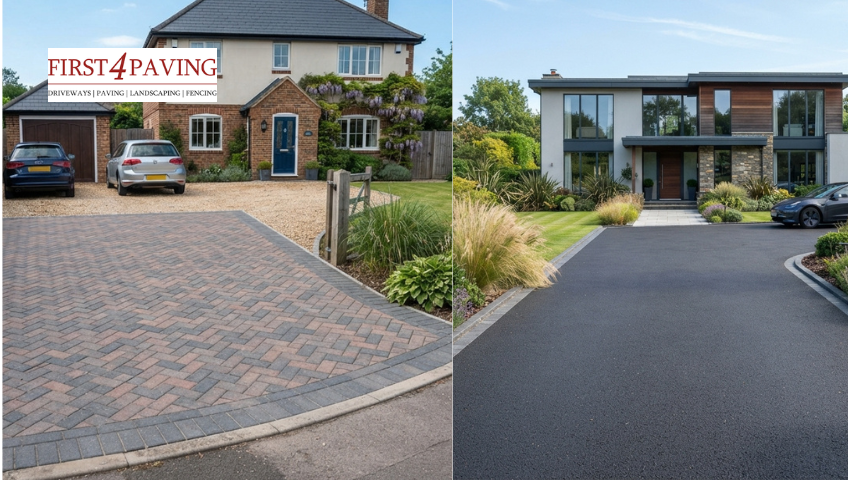
When it comes to choosing a new driveway, block paving vs tarmac is one of the most common comparisons homeowners across the UK make. Block paving is made from interlocking concrete or clay blocks, offering a decorative, customisable finish, while tarmac is a smooth asphalt surface known for quick installation and budget-friendly cost. Both handle daily vehicle use well but differ significantly in cost, durability, and longevity. If upfront cost is your main driver, it’s worth reading our full guide on the cheapest option for a driveway alongside this comparison.
Block paving generally lasts longer (20–30+ years) and offers more design flexibility, but it costs more upfront. Tarmac is cheaper to install and quicker to lay, but it typically lasts 15–20 years and requires more frequent resealing. If budget is your main priority, tarmac wins. If you want a driveway that lasts decades and boosts kerb appeal, block paving is the better long-term investment.
Choosing between block paving and tarmac is one of the biggest decisions homeowners face when planning a new driveway. Both are popular across the UK, both handle daily traffic well, and both come with their own trade-offs in cost, durability, and lifespan. This guide breaks down exactly how they compare, so you can decide which one is right for your home.
What Is Block Paving?
Block paving is a driveway surface made from individual concrete or clay blocks, laid by hand in an interlocking pattern. Because each block is separate, they can be arranged in different layouts herringbone, basketweave, stack bond and come in a wide range of colours and finishes, from charcoal and buff to brindle and silver grey. If you’re considering this route, our step-by-step guide to laying a block paving driveway covers the process in full.
This flexibility is what makes block paving so popular for homeowners who want their driveway to complement the look of their house, rather than serve a functional purpose.
What Is a Tarmac Driveway?
A tarmac driveway is made from asphalt, a mixture of aggregate and bitumen, laid as a single continuous surface and compacted while hot. It creates a smooth, uniform finish and is one of the fastest driveway surfaces to install, which is why it’s often the more budget-friendly option.
Tarmac doesn’t offer the same design variety as block paving, but it’s a practical, hard-wearing choice, especially for larger driveways or commercial areas.
Which Is More Durable, Block Paving or Tarmac?
Both surfaces are built to handle daily vehicle use, but they respond differently to weather, weight, and wear.
Block paving
It handles heavy loads well because the weight is distributed across individual blocks rather than across a single continuous surface. It’s also less prone to cracking under pressure, since a single damaged block can be lifted and replaced without affecting the rest of the driveway. However, without proper edge restraints, blocks can shift or sink over time.
Tarmac Driveway
It performs well under consistent daily use and resists water pooling when laid correctly with proper drainage. But because it’s a single solid surface, it’s more vulnerable to cracking during extreme temperature changes, and oil or fuel spills can soften and permanently stain the surface.
For most UK driveways, block paving slightly edges out tarmac in terms of durability, mainly due to its ability to withstand localised damage and to be repaired.
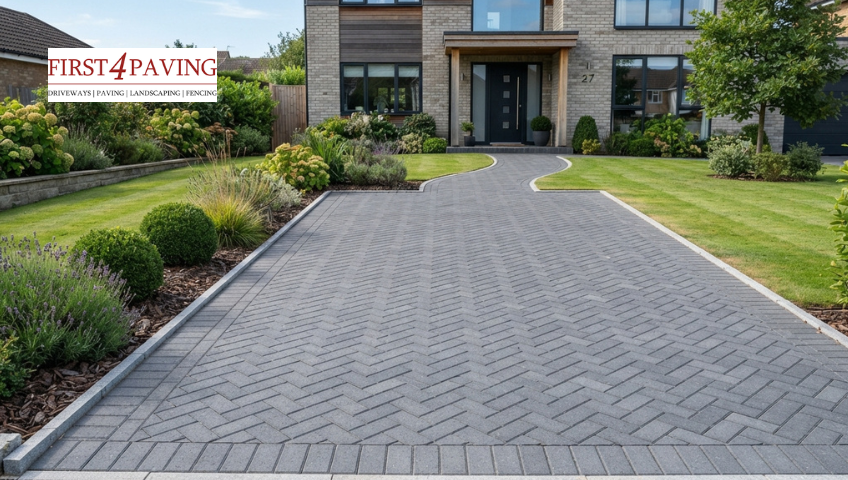
Which Driveway Needs Less Maintenance?
Maintenance is often the deciding factor for homeowners choosing between the two surfaces. For driveway experts in Enfield, this is one of the most common questions asked before installation, so here’s how the upkeep compares.
Block Paving Maintenance
Block paving needs a bit more regular, hands-on upkeep to keep it looking its best:
- Re-sanding the joints: over time, the sand between blocks washes away with rain, so it needs topping up to keep the blocks locked in place and stop weeds taking hold
- Re-levelling sunken blocks: if the ground beneath shifts or settles unevenly, individual blocks can sink slightly and need to be lifted, re-based, and relaid.
- Weed and moss control: gaps between blocks can allow weeds and moss to grow, so regular sweeping, brushing, or treatment to remove moss and weeds is essential to keep the surface tidy.
- Periodic sealing: applying a driveway sealant every couple of years helps protect the blocks from staining, fading, and water damage and makes cleaning easier.
- Regular pressure washing: an occasional deep clean helps lift dirt, oil marks, and algae buildup from the block surface and joints.
- Replacing damaged blocks: if a block cracks or becomes stained beyond repair, it can be lifted out and replaced with a new one without disturbing the rest of the driveway.
- Checking edge restraints: the borders or edging that hold the blocks in place should be checked periodically to ensure they haven’t loosened or shifted.
Tarmac Driveway Maintenance
Tarmac needs less frequent attention, but the repairs tend to be bigger when they’re needed:
- Sealing every few years: a sealant coat helps prevent water from seeping into the surface, which reduces the risk of cracking and frost damage over time
- Filling cracks and potholes: small cracks should be patched early before they widen, and potholes should be filled promptly to prevent further deterioration.
- Full resurfacing: once the surface has worn down significantly or developed widespread cracking, a full resurfacing is usually needed to restore it properly
- Removing oil and fuel stains: spills should be cleaned quickly, as tarmac can absorb and soften from prolonged contact with oil or fuel.
- Clearing debris and standing water: keeping the surface free of leaves, moss, and puddles helps prevent long-term surface damage.
- Line and edge maintenance: if the driveway has painted lines or borders, these may need repainting or edge repair as they wear down over time.
Tarmac requires less day-to-day attention, but when it does need work, repairs are often more noticeable (patchwork sections can look different from the original surface). Block paving requires more regular small maintenance tasks, but repairs blend in seamlessly since individual blocks can be swapped out.
Block Paving or Tarmac Driveway: Which one is Better for Drainage?
This is an important consideration in the UK, where planning permission rules apply to non-permeable driveways over a certain size.
Permeable Block Paving
Permeable block paving allows water to drain through gaps between the blocks and into the ground below, often helping homeowners avoid the need for planning permission.
Standard Tarmac Driveway
Standard tarmac is non-permeable, meaning water runs off the surface rather than through it, which may require additional drainage solutions (such as soakaways) to remain compliant with UK regulations.
If drainage and planning compliance are a concern, permeable block paving is usually the more straightforward option.
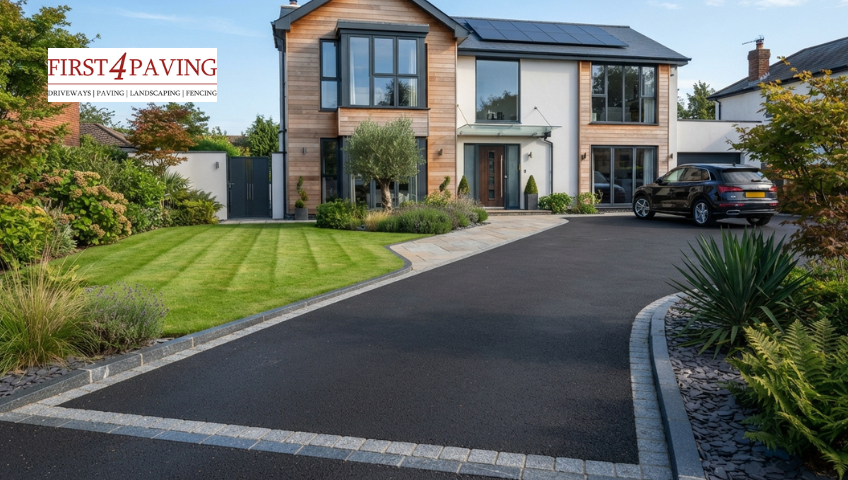
What Is the Lifespan of Block Paving and Tarmac Driveways?
This is where the two surfaces really start to differ in the long run.
Block Paving Lifespan
Block paving typically lasts 20–30 years or more, provided it’s installed on a proper sub-base and maintained correctly. Because the surface is made up of individual interlocking blocks rather than a single continuous layer, it handles ground movement, weight, and weather far better over time. Any localised damage can be fixed without affecting the rest of the driveway. With regular joint re-sanding, occasional re-levelling, and periodic sealing, a well-installed block paving driveway can comfortably outlast a tarmac surface by a decade or more.
Tarmac driveway Lifespan
Tarmac typically lasts 15–20 years before it needs resurfacing or significant repair. As a single continuous surface, it’s more susceptible to cracking due to temperature changes, ground movement, and heavy or repeated loads at the same spot. While regular sealing and prompt crack repair can help extend its life, tarmac generally reaches the point of full resurfacing sooner than block paving does.
The lifespan of both surfaces depends heavily on installation quality. A poorly laid tarmac driveway can fail within a few years, just as poorly laid block paving can shift and sink prematurely. Choosing an experienced, reputable installer matters as much as the material itself. Neither tops the list, though: natural stone and clay pavers outlast both.
Block Paving vs Tarmac: Which One Should You Choose?
| Factor | Block Paving | Tarmac |
| Upfront cost | Higher | Lower |
| Durability | Very durable, easy localised repairs | Durable, but cracks under solid stress |
| Lifespan | 20–30+ years | 15–20 years |
| Maintenance | Regular small upkeep | Less frequent, larger repairs |
| Kerb appeal | High customisable | Moderate uniform finish |
| Drainage | Permeable options available | Requires separate drainage planning |
Choose tarmac if: you want a lower upfront cost, a quick installation, and a simple, uniform look.
Choose block paving if: you want a driveway that lasts longer, adds kerb appeal, and offers more design flexibility.
Why Choose First4 Paving for Your Driveway?
Whichever option suits your home best, First4 Paving installs both block paving and tarmac driveways, so you get honest, unbiased advice rather than a recommendation pushed toward just one option. As Professional driveway contractors in Enfield, our team takes the time to assess your property, budget, and long-term goals before recommending the surface that’s truly right for you, not just the one that’s easiest to sell. We provide expert block paving and tarmac driveway services, and proudly cover driveway installations across Enfield and Hertfordshire, delivering high-quality artistry on every project. We proudly cover driveway installations across Enfield and Hertfordshire, delivering high-quality artistry on every project.
Contact us today for a free, no-obligation quote and expert guidance on the best driveway choice for your home.
Conclusion
Both block paving and tarmac are proven, reliable choices for UK driveways, but the right one for you depends on your priorities. If a lower upfront cost and quick installation matter most, tarmac is hard to beat. If you’re after a driveway that lasts decades, adds genuine kerb appeal, and can be styled to match your home, block paving is the stronger long-term investment. Whichever direction you lean, getting it installed properly by an experienced contractor ultimately determines how long it lasts and how well it performs.
If you’re still weighing up your options, First4 Paving is here to help you choose with confidence and get the job done right the first time.
FAQs
How long does a block paving driveway last compared to tarmac?
Block paving typically lasts 20–30 years or more, while tarmac usually lasts 15–20 years, depending on installation quality and maintenance.
Is tarmac cheaper than block paving in the UK?
Yes, tarmac is generally cheaper to install per square metre than block paving, mainly due to lower labour requirements.
Does block paving need more maintenance than tarmac?
Block paving requires more frequent, smaller tasks such as re-sanding and weed control, while tarmac requires less frequent but larger repairs such as resurfacing.
Can a tarmac driveway be repaired as easily as block paving?
Not quite; block paving repairs are easier to blend in since individual blocks can be replaced, while tarmac patches can be more visible against the original surface.