

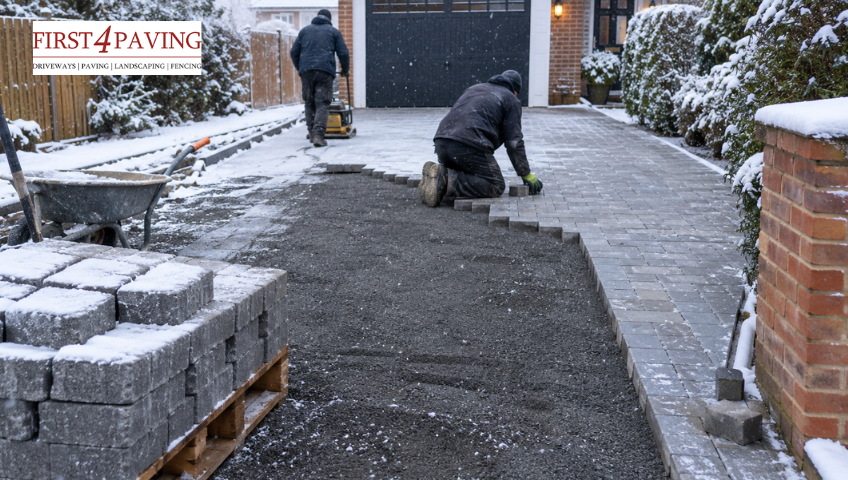
Yes, you can lay a driveway in winter, but the weather decides how well it turns out.
Most materials need dry ground and temperatures above freezing while they are laid and set. Frost, heavy rain and waterlogged soil can weaken the base or spoil the finish. A good contractor will work around the forecast so the job is done properly, not quickly.
If you are planning a new driveway in Enfield or elsewhere in Uk, this guide covers what works in cold weather and when it is better to wait.
What Temperature Is Too Cold to Lay a Driveway?
As a general rule, most driveway work is best done when the air temperature stays above 5°C, and the ground isn’t frozen. Below that, materials set slowly, bedding layers can freeze and the finished surface may be weaker.
The figures below are general guidance. Exact limits depend on the product, so your contractor should check the manufacturer’s advice before starting.
| Surface | Cold weather limit | What happens if it is too cold |
|---|---|---|
| Block paving | Avoid frozen ground and frozen bedding sand | Uneven bedding and loose blocks later |
| Tarmac | Usually above 5°C, dry base | Mix cools too fast and does not compact well |
| Concrete | Above 5°C and no frost on the day | Slow strength gain and frost damage to the surface |
| Resin-bound gravel | Above 5°C and fully dry | Resin cures poorly and the surface can stay soft |
| Loose gravel | Ground not frozen | Least affected, but a frozen base will not compact |
Which Driveway Materials Work Best in Winter?
Block paving and loose gravel cope best in cold weather because they don’t rely on a chemical or heat-based set. Concrete, tarmac, and resin-bound surfaces are more sensitive, so your choice of material strongly affects whether winter work is a good idea.
Block Paving
Block paving is the most winter-friendly option. The blocks sit on a compacted sub-base and a layer of bedding sand, so nothing needs to cure. You can work on cold, dry days as long as the ground isn’t frozen and the sand isn’t wet or frosted. If frost is forecast overnight, cover the laid area, then fill and compact the joints once the blocks are dry.
Gravel
Gravel is also flexible in cold weather. It doesn’t set, so low temperatures don’t affect the surface itself. What matters is the ground underneath. If the soil is frozen or flooded, you can’t compact the sub-base properly, and the driveway will settle unevenly later. Edging and a stabilisation grid still need a solid base, especially on a sloping drive.
Tarmac
You can lay tarmac in colder months, but it needs more care. The mix arrives hot and has to be laid and compacted quickly before it cools. On cold, wet or windy days, it loses heat fast, which can leave the surface weak and poorly bonded. Dry weather and a well-prepared base are essential.
Our team lays tarmac driveways in Enfield and the surrounding areas, and we only start when the weather allows the mix to be compacted properly.
Concrete
Concrete is the most vulnerable material in winter. Frost can damage fresh concrete before it gains strength, causing flaking, cracking, and a weak surface. It needs good timing, a dry forecast and protection, such as covers or insulation, while it cures. If hard frost is expected, it is usually safer to wait.
Resin-Bound Gravel
Resin-bound gravel needs a dry surface and mild temperatures to cure properly. Cold or damp conditions slow the curing process and can leave the surface soft or patchy. As a result, it is usually the first job to be postponed in winter, and spring or summer is a better time.
If you are unsure which surface suits your property, the choice usually comes down to block paving vs tarmac, weighing cost, upkeep and lifespan. A short site visit is usually enough to tell you which surface will perform best and look right for your property, whatever the season.
Pros and Cons of Laying a Driveway in Winter
Winter work can save time and sometimes money, but it carries a higher risk of delays and poorer results.
| Pros | Cons |
|---|---|
| Contractors are often more available and can start sooner | Rain and frost can stop work for days at a time |
| You may be able to book a date before the spring rush | Concrete, tarmac and resin-bound surfaces may need to wait |
| Block paving and gravel can be laid on dry, cold days | Wet ground makes the sub-base harder to compact |
| The driveway is ready for spring and summer use | Shorter daylight hours mean slower progress |
How to Lay a Driveway Safely in Winter
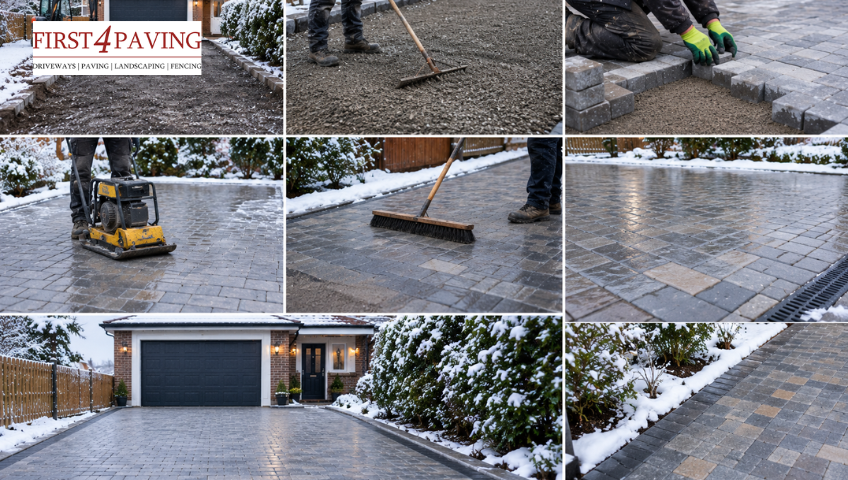
The method does not change in winter, but the planning has to be tighter. These five steps make the biggest difference to how the finished driveway turns out.
Work to the Forecast
Schedule the surfacing for dry spells and check the forecast a few days ahead. Keep a backup day in case of rain or frost, so the job can move without rushing or cutting corners. A short delay is better than laying a surface in poor conditions.
Check the Ground
Do not build on frozen or waterlogged soil. The sub-base needs firm ground to compact properly, and a base laid on soft or frozen soil can settle unevenly once the weather warms up. If the ground is too wet, wait for it to drain.
Protect Fresh Work
Cover new concrete or bedding sand overnight so frost cannot reach it. Frost on freshly laid material can weaken the surface before it has had time to settle or gain strength. Covers, insulation sheets or tarpaulins are simple ways to protect the work.
Keep Drainage Working
Water that cannot escape will freeze and lift the surface. Install falls, channels, and soakaways from the start so rainwater runs away from the driveway and house instead of sitting in the base. Where possible, follow SuDS-compliant drainage principles, such as permeable surfaces and soakaways, so water drains naturally instead of running onto the road. Good drainage matters even more in winter, when the ground is already wet.
Allow for Curing
Some surfaces need extra time before cars can use them in cold weather. Concrete and resin-bound gravel cure more slowly in the cold, so the driveway may need to stay closed longer than usual. Your contractor should tell you exactly when it is safe to drive on.
When Laying a Driveway Is Not the Right Option
Winter work is not always a good idea. In some conditions, waiting a few weeks protects both the driveway’s quality and your money. Here are the situations where it is better to hold off:
- Hard frost is forecast: If freezing temperatures are expected for several days, the ground and bedding layers can freeze solid. Materials cannot be compacted properly, and fresh concrete or resin can be damaged before it sets.
- The ground is waterlogged: Heavy rain and saturated soil make it impossible to compact the sub-base correctly. A base laid on wet ground can sink or develop soft spots later.
- You have chosen concrete or resin-bound gravel: These surfaces rely on curing, and cold, damp weather slows or ruins the process. Spring or early summer is the better time.
- The driveway contractor cannot give a weather plan: If they cannot explain when they would postpone the job or how they would protect the work from frost, that is a warning sign.
Conclusion
You can lay a driveway in winter if the ground is firm, the weather is dry, and the material suits the conditions. Block paving and gravel handle the cold best, while concrete and resin-bound surfaces are usually better left until spring.
The right choice depends on your site, your timing and the forecast. First 4 Paving can advise on the best surface and start date for your property before any work begins.
Get Your Free, No-Obligation Driveway Quote
Serving Enfield, Hertfordshire and nearby areas. No deposit needed. Nothing to pay until completion.
FAQs
Can you lay block paving in winter?
Yes. Block paving is one of the best options for cold weather, as long as the ground is not frozen or waterlogged and the sub-base can be compacted properly.
Can concrete be poured in frost?
It is not recommended. Frost can damage fresh concrete before it gains strength, so contractors usually avoid pouring when temperatures are near or below freezing.
Is it cheaper to lay a driveway in winter?
Sometimes. Contractors may have more availability and offer earlier start dates, but weather delays can add time, so cheaper is not guaranteed.
What is the best driveway surface for winter?
Block paving is usually the safest choice, as it can be laid in cold, dry weather and does not rely on a curing process.