

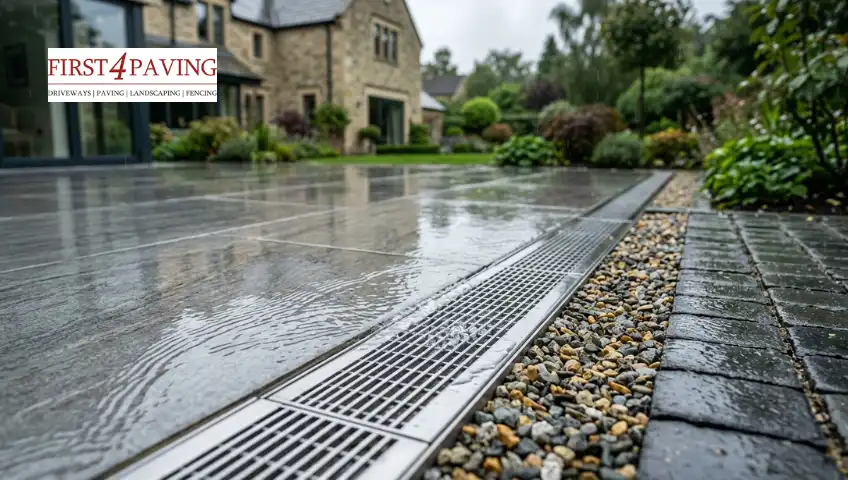
Standing water on a patio is not just something that looks bad. It can quickly turn into a real problem. Surfaces become slippery, moss and algae start to grow, and over time, the paving can begin to shift or crack. In some cases, poor drainage can even put extra pressure on nearby structures. With how often it rains in the UK, even a slightly uneven patio can start showing issues sooner than expected.
The positive side is that these drainage problems are usually both preventable and fixable. Whether you are planning a new patio or dealing with an existing one that holds water, the right drainage setup can completely improve how it performs and lasts over time.
In this guide, we will look at how patio drainage works, which systems actually perform well in UK conditions, the common mistakes people make, and simple ways to improve water flow around your outdoor space.
What Is Patio Drainage?
Patio drainage refers to the system of slopes, channels, pipes, and permeable surfaces that work together to move rainwater away from your patio and prevent it from pooling. Without a proper drainage setup, water has nowhere to go after rainfall; it sits on the surface, seeps beneath slabs, or runs toward your house walls.
Good drainage keeps patios safer, cleaner, and helps protect nearby walls and garden spaces from water damage. Since the UK gets regular rainfall, many homeowners now add patio drainage solutions during patio installation or renovation projects.
Common Patio Drainage Problems in the UK
1. Water Pooling on the Surface
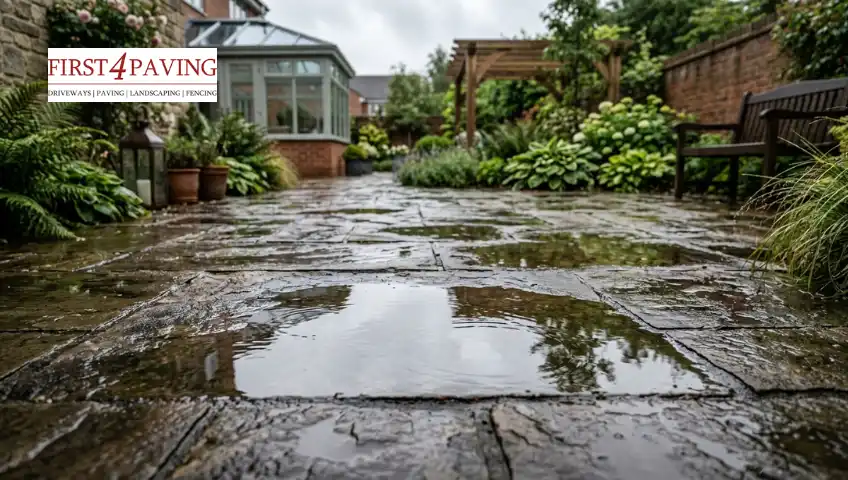
Standing water is one of the most common signs of poor patio drainage in UK systems. After heavy rain, puddles often appear in low areas of the patio. This usually happens when the surface slope is uneven or too flat.
2. Slippery Moss and Algae
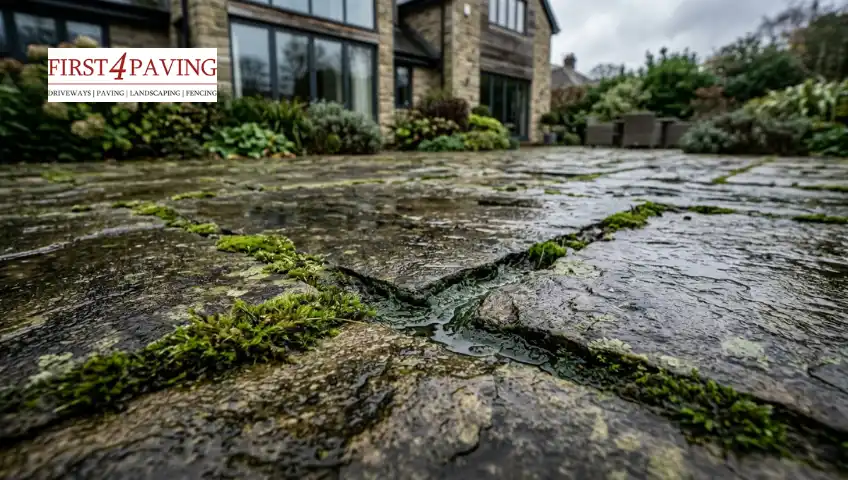
Wet patios can quickly attract moss and algae growth. These slippery green patches not only affect the look of the patio but also create safety risks during rainy and winter months.
3. Cracked or Loose Paving
Excess moisture under paving slabs can slowly weaken the patio base. Over time, this may cause cracked paving, loose stones, or sinking slabs.
4. Water Near House Walls
Poor drainage for patios near house areas can direct rainwater toward walls and doors. If ignored for too long, this may lead to damp patches or damage around the property’s foundations.
Why Proper Patio Drainage Matters
Many people think patio drainage is only about appearance, but it plays a far more important role in protecting your property and keeping your outdoor space safe all year round.
In the UK, where rain is a regular occurrence throughout every season, even a small drainage issue can quickly turn into a costly problem. A well-designed drainage system for patios near the house helps in several important ways:
- Reduce water damage: Standing water near walls and foundations can slowly cause dampness, cracks, and long-term structural issues that are expensive to repair.
- Prevent slippery surfaces: Wet patios attract moss and algae growth, which create genuine safety risks for children, elderly family members, and anyone using the space during wet weather.
- Extend patio life: Excess moisture weakens the base beneath paving slabs, leading to sinking, cracking, and loose stones that need costly repairs or full replacement.
- Lower maintenance needs: A patio that drains well stays cleaner for longer, meaning less frequent pressure washing, moss treatment, and joint repairs.
- Improve outdoor comfort: A well-drained patio dries out quickly after rain, so you can use your outdoor space far sooner rather than waiting days for puddles to clear.
Good drainage also benefits the surrounding garden. When rainwater is directed properly through channels, soakaways, or permeable surfaces, your soil stays balanced rather than waterlogged for days after a heavy downpour, helping plants thrive and reducing the risk of lawn damage close to the patio edge.
Types of Patio Drainage Systems
Different patio drainage systems are used across UK homes to manage rainwater and prevent surface flooding. The right option depends on your patio size, layout, and soil type.
1. Channel Drains
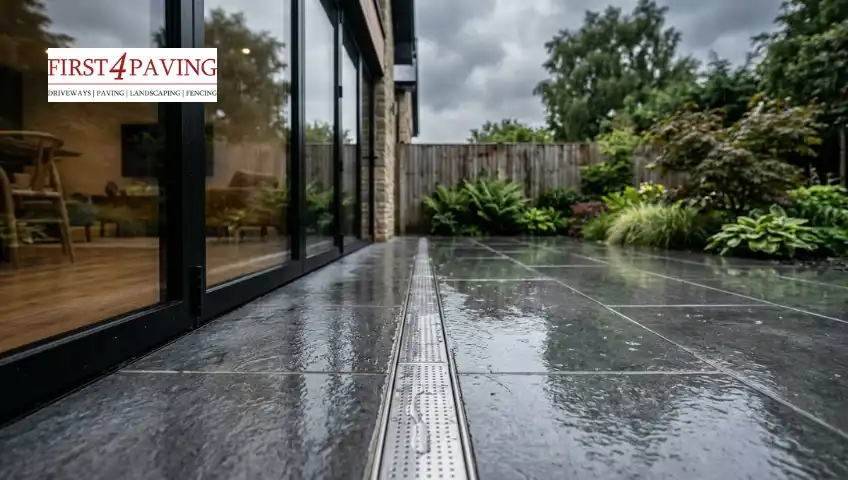
Channel drains are narrow drains fitted along patio edges or near doors. They collect rainwater and direct it into underground pipes. A patio drainage channel is a popular choice for modern patios because it handles heavy rainfall well.
2. French Drains
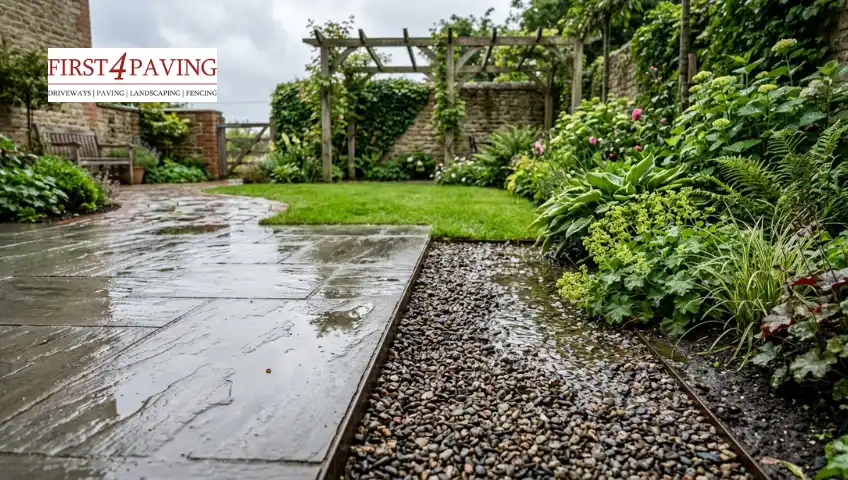
French drains use gravel and underground pipes to move water away from wet areas. They work especially well in gardens with clay soil where water drains slowly.
3. Soakaways
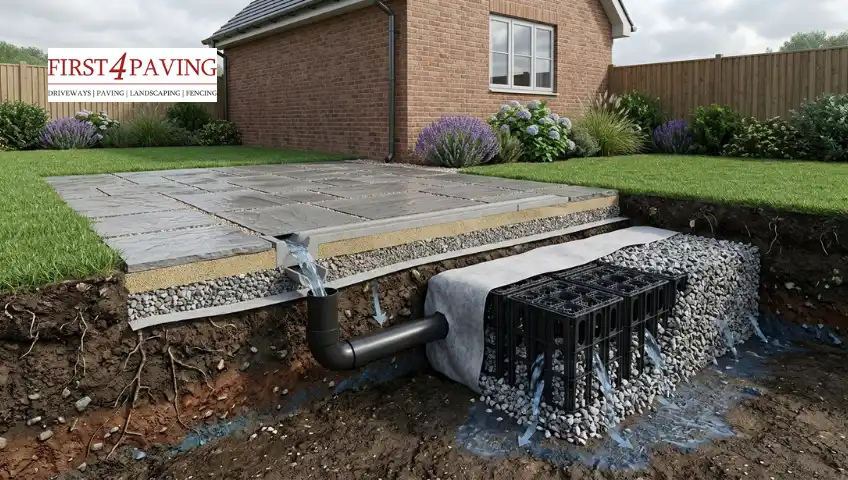
A soakaway is an underground drainage area filled with stones or drainage crates. Water slowly filters into the soil, making it a common choice in many patio drainage UK projects.
4. Gravel Drainage Areas
Gravel helps absorb rainwater naturally and reduces puddles on patio surfaces. It also adds a clean and decorative finish to outdoor spaces.
5. Permeable Paving
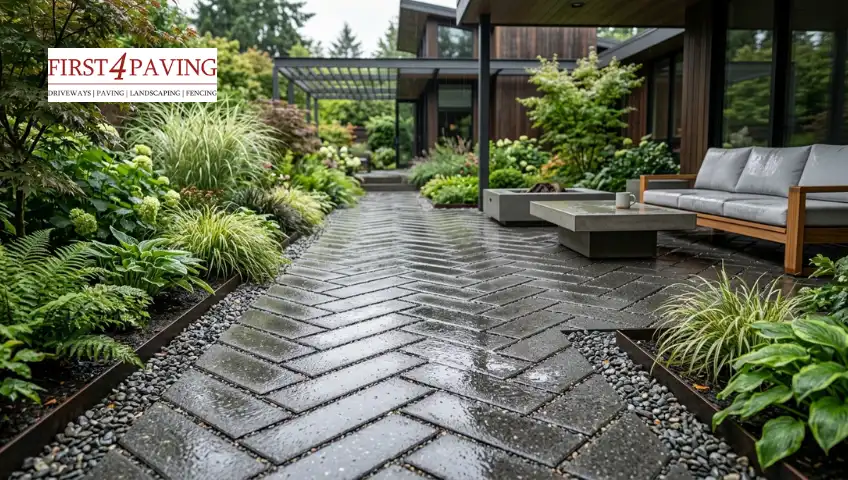
Permeable paving lets water pass through small gaps between blocks or stones instead of collecting on the surface. It is one of the most effective patio water drainage ideas for eco-friendly patios.
How to Improve Patio Drainage
Fixing drainage problems does not always mean rebuilding the entire patio. A few smart changes can greatly improve water flow and reduce standing water.
1. Create the Right Patio Slope
A patio should slightly slope away from the house so rainwater can flow toward drains or garden areas. Even a small adjustment can improve patio drainage performance in the UK.
2. Install Drainage Channels
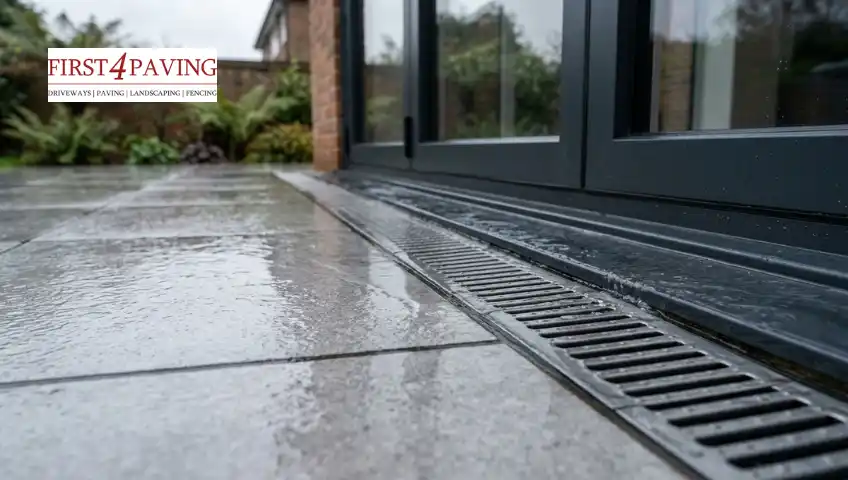
Adding a patio drainage channel near doors, walls, or low areas helps collect rainwater before puddles form. Modern drainage channels are available in different styles to match patio designs.
3. Use Permeable Materials
Permeable paving, gravel joints, and porous surfaces allow water to drain naturally through the patio instead of sitting on top.
4. Add Gravel Borders
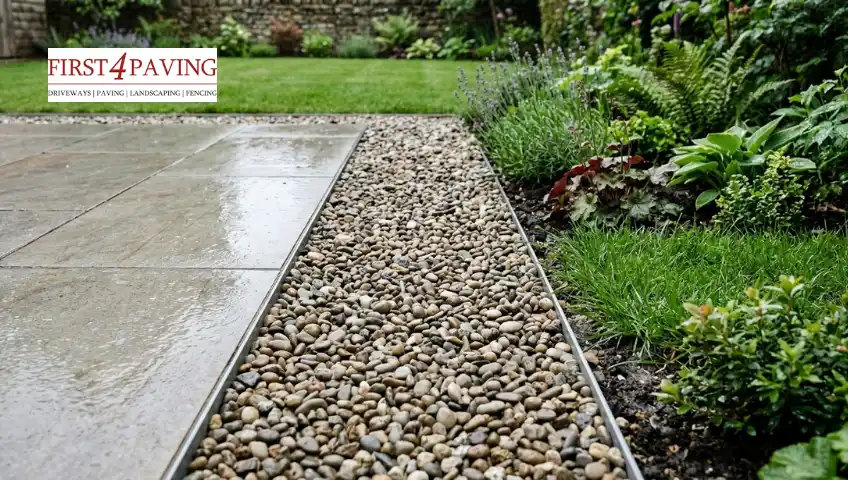
Gravel borders around patios help absorb extra water and reduce runoff. They also give outdoor spaces a cleaner and more decorative finish.
5. Improve Soil Drainage
Heavy clay soil often traps water for long periods. Mixing compost or organic material into the soil can improve drainage over time.
Best Patio Materials for Drainage
The right paving material plays a big role in controlling rainwater and improving patio drainage solutions.
- Porcelain Paving: A strong, low-maintenance option that looks smart and performs well when laid with the correct slope to help water run off properly.
- Natural Stone: A classic choice that gives a premium finish. Some types can naturally absorb a small amount of water, which helps reduce surface pooling.
- Resin-Bound Surfaces: A modern, permeable solution that allows rainwater to drain through the surface rather than sitting on top, keeping the area clearer during wet weather.
- Permeable Block Paving: Designed with small gaps that let water pass through into the ground below, making it one of the most effective options for managing patio drainage in the UK.
Patio Drainage Installation Basics
A successful patio drainage installation starts with proper planning, the correct materials, and a layout that allows water to flow away from the surface efficiently. A well-installed drainage system helps prevent standing water, slippery areas, and long-term patio damage. For best results, it is always worth working with an experienced paving contractor who understands local drainage requirements and soil conditions.
Step 1: Check the Patio Slope
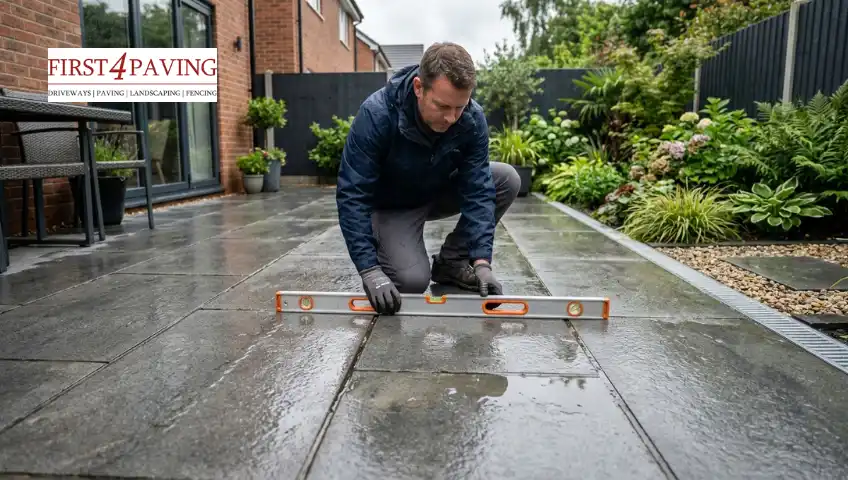
Start by checking how rainwater currently moves across the patio. The surface should have a slight slope that directs water away from the house and toward a suitable drainage point. This step helps identify low spots where water may collect after heavy rain.
Step 2: Choose the Right Drainage System
The best drainage setup depends on the patio size, surface material, and water runoff levels. Large patios often need channel drains or soakaways, while smaller patios may only require gravel borders, drainage gaps, or permeable paving to improve water flow.
Step 3: Prepare a Solid Sub-Base
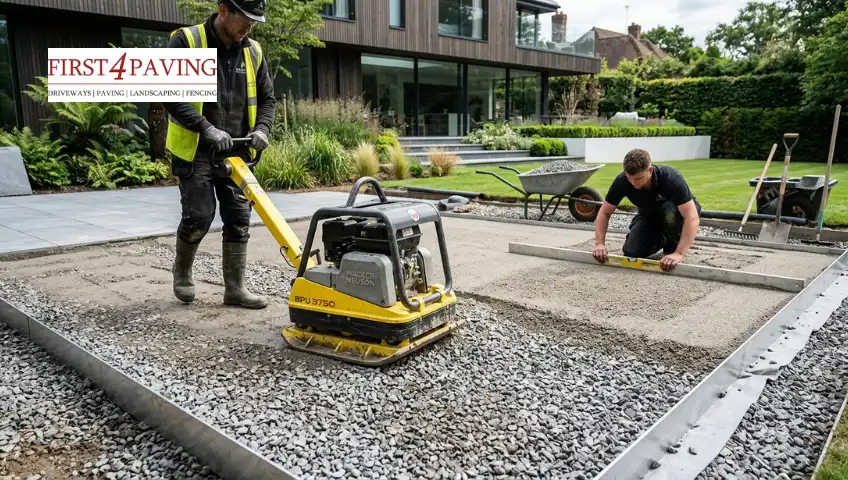
A strong sub-base is important for both stability and drainage. Crushed stone or MOT Type 1 is commonly used beneath patios because it allows water to drain through the foundation while supporting the surface above.
Step 4: Install Drains and Pipework
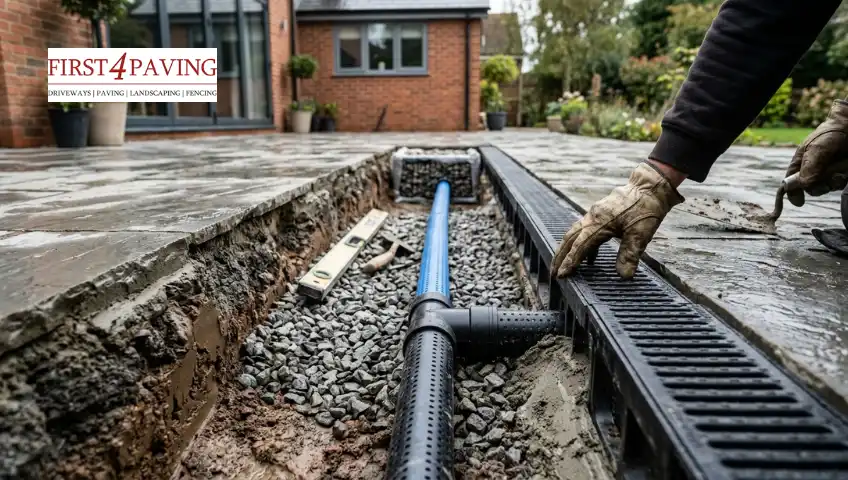
Once the base is prepared, the drainage system can be installed. This may include fitting channel drains, underground pipes, soakaways, or drainage grates, depending on the patio design and property layout.
Step 5: Test the Water Flow
Before finishing the installation, test the patio with water to make sure it drains correctly. This final check helps confirm that water flows smoothly into the drainage system without pooling on the surface.
Patio Drainage Maintenance Tips
Even the best patio drainage systems need regular maintenance to work properly and prevent water problems.
- Clean drains regularly: Remove leaves, dirt, and moss from drainage channels every few months to keep water flowing smoothly.
- Remove moss and algae: Use a patio cleaner or stiff brush to clean slippery green patches, especially during wet weather.
- Check for cracks in paving: Repair small cracks early before they turn into bigger patio damage.
- Inspect drainage after heavy rain: After storms or long rainy periods, check if water drains properly across the patio surface.
- Keep drainage channels clear: Blocked patio drainage channel systems can quickly lead to standing water and puddles.
- Watch for sinking slabs: Uneven or loose paving may be a sign of hidden drainage issues underneath the patio.
- Trim nearby plants regularly: Overgrown plants and roots can block drains and affect water flow around the patio.
- Check gravel areas: Rake and refresh gravel drainage zones when needed to help maintain proper drainage.
How Much Does Patio Drainage Cost in the UK?
The cost of patio drainage UK projects depends on the patio size, drainage system, and installation work needed. Simple fixes like a patio drainage channel may cost a few hundred pounds, while larger drainage projects can cost more.
| Drainage Type | Estimated Cost (UK) |
| Gravel border / simple fix | £150 – £400 |
| Patio drainage channel (single run) | £300 – £800 |
| French drain installation | £500 – £1,200 |
| Soakaway system | £1,000 – £2,500 |
| Full permeable paving (per m²) | £60 – £120 per m² |
Factors that push costs higher:
- Heavy clay soil requires extra excavation
- Large patios needing multiple drain runs
- Access difficulties (narrow side gates, raised patios)
- Premium materials like porcelain or natural stone
While professional drainage installation adds to upfront costs, it is worth comparing it against the price of repairing damp walls (£500–£3,000+), replacing sunken paving, or treating foundation damp, all of which become real risks when drainage is ignored.
Conclusion
Effective patio drainage is not just a finishing touch; it is a long-term protection system for your outdoor space and your home. In a country like the UK, where rainfall is frequent and often heavy, ignoring drainage can quickly lead to slippery surfaces, structural damage, and costly repairs. On the other hand, a well-planned system ensures that water is controlled, directed, and safely absorbed without affecting your patio or nearby foundations.
Whether you choose channel drains, soakaways, permeable paving, or simple slope adjustments, the key is to match the solution to your garden’s conditions and maintain it regularly. Investing in proper patio drainage UK solutions today not only improves safety and appearance but also extends the life of your patio for many years to come.
FAQS
1. What is the best drainage option for a patio in the UK?
The best patio drainage option in the UK depends on your garden layout and soil type, but channel drains, soakaways, and permeable paving are among the most effective solutions for managing heavy rainfall.
2. What are the rules for patio drainage?
UK patio drainage rules generally require rainwater to drain into permeable ground, soakaways, or proper drainage systems rather than flowing directly into public drains or neighbouring properties.
3. What causes water to pool on a patio?
Water usually pools on a patio because of poor drainage, blocked channels, or an incorrect slope that stops rainwater from flowing away properly.
4. How much does patio drainage cost in the UK?
Patio drainage costs in the UK can range from around £150 for simple gravel drainage fixes to over £2,500 for larger soakaway or full drainage systems.
5. Can poor patio drainage damage my house?
Yes, poor patio drainage can direct water toward walls and foundations, which may lead to damp problems, cracked paving, and long-term structural damage.