

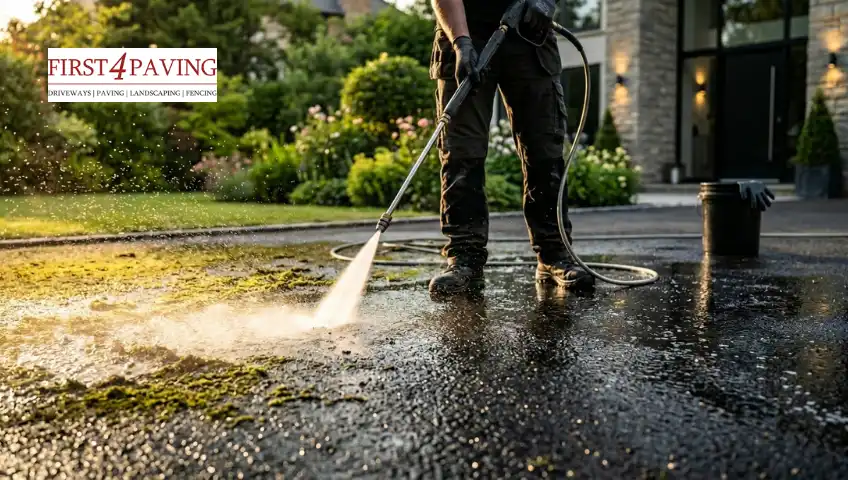
A tarmac driveway takes a beating all year round. Rain, mud, oil drips, and organic growth like moss and algae gradually build up on the surface and make even a well-laid driveway look tired and neglected. And the worst part? Most homeowners do not notice the damage until it is already too late to fix with a simple cleaning.
Cleaning a tarmac driveway does not require expensive equipment or professional help. With the right tools, a gentle approach, and a simple routine, you can keep your driveway looking fresh and well-maintained throughout the year. Sound like something your driveway needs?
As a trusted driveway contractor in Enfield, we have seen every kind of tarmac problem imaginable. This guide walks you through everything you need to know, from the basic tools required to step-by-step cleaning instructions, how to deal with oil stains, and the common mistakes that cause unnecessary damage.
Why Regular Tarmac Driveway Cleaning Matters
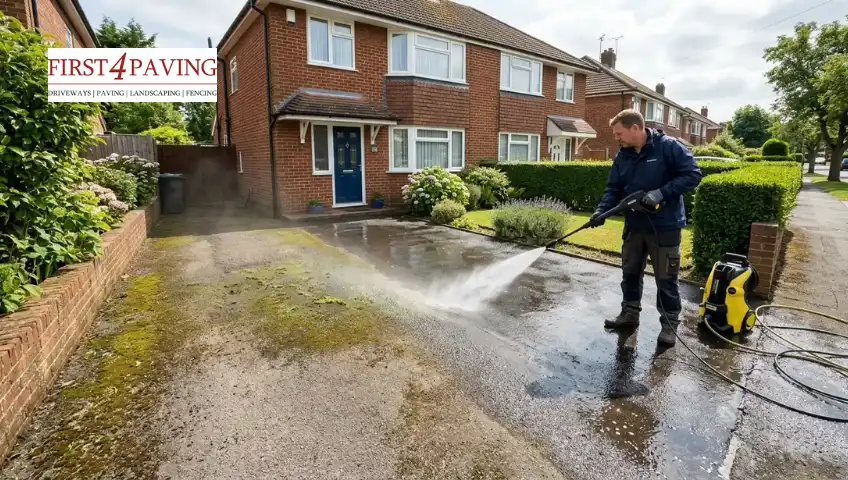
A clean driveway does more than improve kerb appeal. Dirt and organic growth can slowly damage the surface if left untreated. Moss and algae hold moisture, which may weaken the top layer of the tarmac over time.
Regular tarmac driveway cleaning helps:
- Improve the appearance of your property
- Reduce slippery surfaces
- Remove weeds and moss growth
- Prevent long-term surface damage
- Extend the life of your driveway
Cleaning your driveway once every few months can make a huge difference.
Things You Need Before Cleaning Tarmac
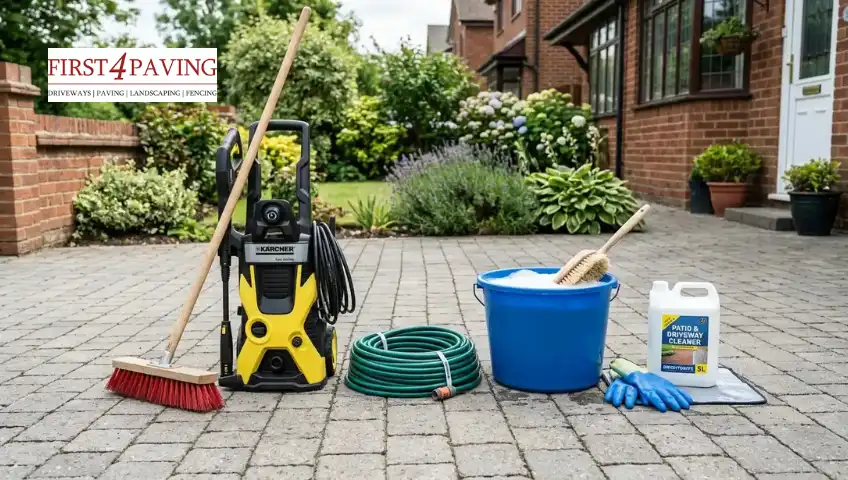
Before you start cleaning tarmac driveway surfaces, it helps to have the right tools ready. Using proper equipment makes the work quicker, easier, and safer for the surface.
Essential Driveway Cleaning Tools
- Stiff outdoor broom
- Garden hose
- A bucket filled with warm water
- Soft brush or deck brush
- Mild detergent or soap
- Moss and algae remover
- Pressure washer on a low setting
- Protective gloves
Good driveway cleaning tools help lift dirt without damaging the tarmac. Soft brushes and gentle cleaning products work best because harsh scrubbing can wear down the surface over time.
The Best Way to Clean Tarmac Driveway Surfaces
Cold temperatures, heavy rain, and damp conditions can quickly damage poor-quality outdoor materials. Choosing durable, weather-resistant steps helps keep your entrance safe, attractive, and low-maintenance throughout the year.
Step 1: Clear Away Loose Dirt and Debris
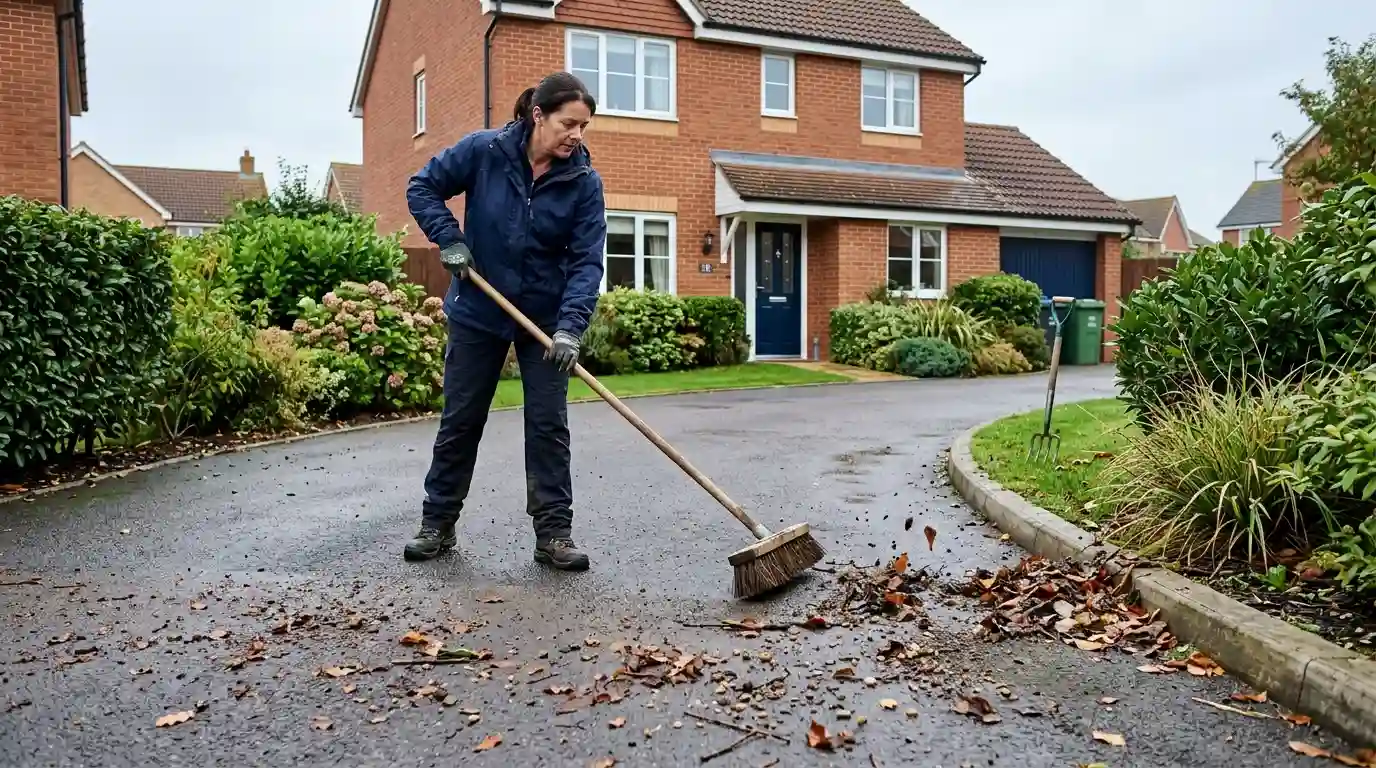
Start by sweeping the driveway with a stiff outdoor broom. Remove leaves, mud, weeds, and loose stones from the surface and edges. This stops dirt from turning into muddy patches once water is added.
Step 2: Remove Moss and Algae
Moss and algae are common on tarmac driveways, especially in damp or shaded areas. Apply a suitable tarmac driveway cleaner and leave it for 10–20 minutes to allow it to work effectively. Then scrub gently if needed and rinse thoroughly with clean water. Avoid strong bleach products, as they may weaken the surface over time.
Step 3: Wash the Surface Gently
Mix warm water with mild detergent in a bucket and scrub the driveway using a soft brush. Focus on stained areas and darker patches where grime builds up. This is one of the safest ways for cleaning tarmac driveway surfaces regularly.
Step 4: Rinse the Driveway Carefully
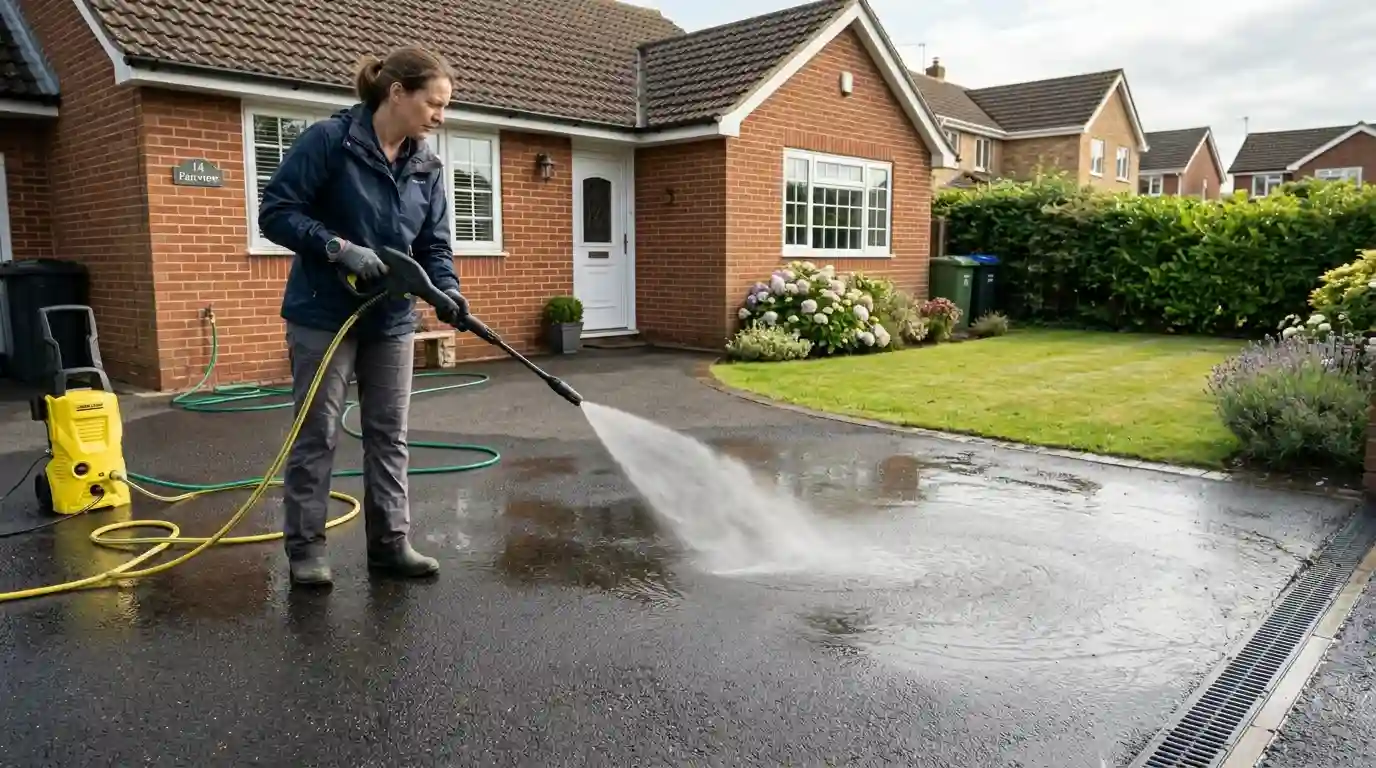
Rinse the driveway using a garden hose or a pressure washer on a low setting. Keep the pressure steady and avoid spraying too closely to the surface. Gentle rinsing helps clean tarmac driveway areas without damaging the finish.
Step 5: Allow the Surface to Dry Fully
Leave the driveway to dry completely before parking on it again. This usually takes two to three hours in mild weather, longer in cold or overcast conditions. Parking too soon can leave tyre marks or press dirt back into the surface while it is still damp.
How Long Does It Take to Clean a Tarmac Driveway?
One of the most common questions homeowners ask is how much time they should set aside for the job. The honest answer depends on the size of your driveway and how dirty it is, but here is a rough guide to help you plan:
| Driveway Size | Basic Clean | Deep Clean with Moss Treatment |
|---|---|---|
| Small (1-2 cars) | 30–45 minutes | 1.5–2 hours |
| Medium (2-3 cars) | 45–90 minutes | 2–3 hours |
| Large (4+ cars) | 1.5–2 hours | 3–4 hours |
A few things that affect the time:
- Moss and algae treatment needs to be left on the surface for 15–30 minutes before scrubbing, which adds to the total time.
- Oil stains may need a second application and extra scrubbing time.
- Drying time should also be considered. Tarmac needs at least a few hours to dry fully before parking on it again.
- Pressure washing is faster than hand scrubbing, but use it only on driveways in good condition.
For a standard two-car driveway with no major staining, most homeowners can complete a thorough clean in around one hour. Set aside a full afternoon for a deep clean that includes moss treatment and stubborn stain removal.
Seasonal Tarmac Driveway Cleaning Guide
Tarmac driveways are exposed to changing weather conditions throughout the year. Following a seasonal cleaning routine helps keep the surface in good condition and prevents long-term damage.
Spring Cleaning
Spring is the best time to carry out a deep clean after the winter season. During colder months, moss, algae, and dirt often build up and need to be properly removed.
Checklist:
- Remove leaves and winter debris
- Apply moss and algae remover
- Lightly scrub and rinse the surface
- Inspect for cracks or surface damage
- Apply tarmac sealant if necessary
Summer Maintenance
High temperatures in summer can soften the tarmac surface and make it more sensitive to damage. Simple and regular maintenance is usually enough to keep the driveway clean and safe.
Checklist:
- Sweep the surface weekly
- Clean spills as soon as they happen
- Avoid parking heavy vehicles in extreme heat
- Avoid pressure washing on very hot days
Autumn Preparation
Autumn brings falling leaves and increased moisture, which can quickly affect the driveway’s appearance. Regular cleaning during this season helps prevent stains and reduces moss growth.
Checklist:
- Sweep leaves regularly
- Remove wet debris promptly
- Treat early signs of moss growth
- Keep drainage areas clear
How to Remove Oil Stains from Tarmac
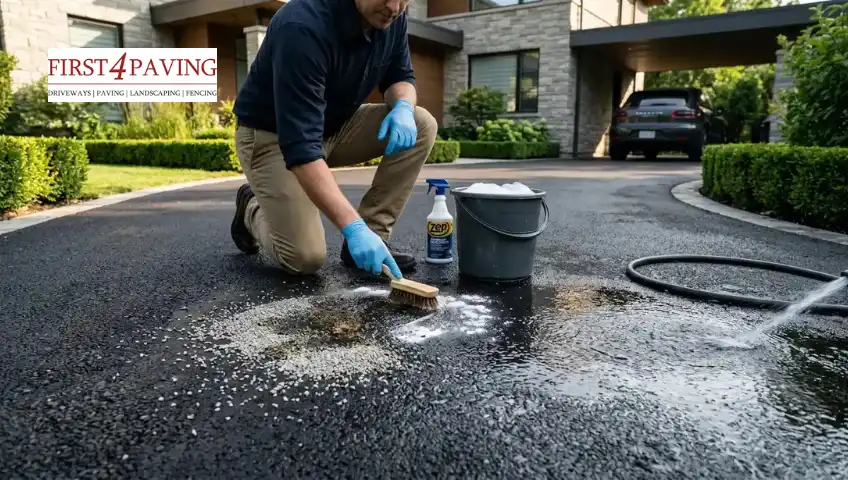
Oil stains are one of the most common problems on a tarmac driveway. Cars can leave dark patches that soak deep into the surface, making the driveway look untidy. Cleaning the stain quickly usually gives better results.
To remove oil stains from tarmac driveways:
- Cover the stain with cat litter or baking soda
- Leave it for a few hours to absorb the oil
- Sweep away the leftover material
- Scrub the area gently using warm water and mild detergent
- Rinse the surface with clean water
For stubborn marks, use a specialist tarmac cleaner made for oil removal. Avoid petrol or harsh solvents because they can soften the tarmac and damage the surface over time. For a full breakdown of this process for other surfaces, read the guide on removing an oil stain from a driveway. If the stain has soaked too deeply, a professional driveway cleaning service will get the job done safely.
Common Mistakes to Avoid When Cleaning Tarmac
Using Too Much Pressure: A pressure washer on a high setting can strip the top layer of tarmac and loosen the stones embedded in the surface. Always use a low to medium setting, keep the nozzle moving, and maintain a safe distance of at least 30 centimetres. On older or cracked driveways, avoid pressure washing altogether and stick to hand scrubbing.
Using the Wrong Cleaning Products: Tarmac is softer than concrete and reacts badly to harsh chemicals. Bleach can discolour and weaken the surface. Petrol, white spirit, and acidic cleaners break down the bitumen binder that holds the tarmac together. Always use a mild detergent or a product specifically designed for tarmac or asphalt surfaces.
Leaving Moss and Algae Untreated: Moss and algae spread fast in damp or shaded areas. Left untreated, they hold moisture against the surface, which softens and gradually breaks down the tarmac underneath. They also make the surface dangerously slippery. Treat early and treat regularly rather than waiting until the growth becomes a visible problem.
Cleaning in Freezing Conditions: Water left in small surface cracks will freeze overnight and expand, widening those cracks further. Never pressure wash or deep clean your driveway when temperatures are near or below zero. If you need to remove ice or snow, use a plastic shovel and sand for grip rather than salt, which damages both tarmac and nearby plants.
Ignoring Spills: Oil, fuel, and other vehicle fluids soak into tarmac quickly. The longer a spill sits, the deeper it penetrates and the harder it becomes to remove. Keep absorbent powder or cat litter nearby and deal with any spills the moment they happen.
Top Tips to Keep Your Drive Looking Brand New
Now that you know how to wash tarmac driveway surfaces safely, keeping it looking great all year round is easy with a few simple habits:
- Sweep regularly: Giving the drive a quick sweep once a week stops organic matter from breaking down and feeding moss seeds.
- Avoid heavy parking: Try not to park heavy delivery vans or caravans on very hot summer days. When the tarmac gets hot, it softens, and heavy vehicles can leave permanent tyre dents.
- Fix spills immediately: Keep a bag of absorbent powder handy to tackle car leaks as soon as they happen.
- Consider a sealant: Every few years, after completing a deep-clean tarmac driveway routine, you can apply a fresh coat of tarmac sealer. This acts as a protective shield, restoring the rich black colour and preventing water from seeping into the pores. Learn more about sealing a driveway in Enfield to make it last even longer.
Conclusion
Keeping a tarmac driveway clean is one of the simplest ways to maintain the overall look and value of your home. Regular cleaning helps prevent dirt, moss, and algae from building up, which not only improves curb appeal but also protects the surface from long-term damage. With the right tools and gentle methods, you can easily manage routine upkeep without harming the tarmac.
By following a consistent routine for cleaning a tarmac driveway, you can extend its lifespan and keep it looking fresh throughout the year. Simple habits like removing stains quickly, sweeping regularly, and occasionally deep cleaning make a big difference and ensure your driveway stays safe, clean, and visually appealing in all seasons. If your tarmac needs professional attention, feel free to contact us, and we will be happy to help.
Frequently Asked Questions:
1. How do I clean a tarmac driveway without a pressure washer?
You can clean a tarmac driveway without a pressure washer by sweeping off loose dirt first, then scrubbing the surface with warm water and mild detergent using a stiff brush. Rinse it off with a garden hose for a clean finish. This method is safe and helps protect the surface from damage.
2. What is the best way to clean a tarmac driveway?
The best way is a combination of sweeping, using a mild tarmac-safe cleaner, gentle scrubbing, and low-pressure rinsing. Regular cleaning every few months prevents dirt, moss, and stains from building up and keeps the surface looking fresh.
3. How do you remove oil stains from a tarmac driveway?
To remove oil stains, apply cat litter, sand, or baking soda to absorb the oil. Leave it for a few hours, then scrub the area with warm water and mild detergent. For stubborn stains, use a tarmac-safe degreaser for better results.
4. What is the best cleaner for tarmac driveways?
The best cleaner is a mild detergent mixed with warm water or a specialist tarmac driveway cleaner. These remove dirt effectively without damaging the surface. Avoid bleach or strong acid-based cleaners as they can weaken the tarmac.
5. How often should you clean a tarmac driveway?
A tarmac driveway should be lightly cleaned every 1–2 months and deep cleaned every 6–12 months. Regular sweeping once a week also helps prevent moss, algae, and dirt buildup.