

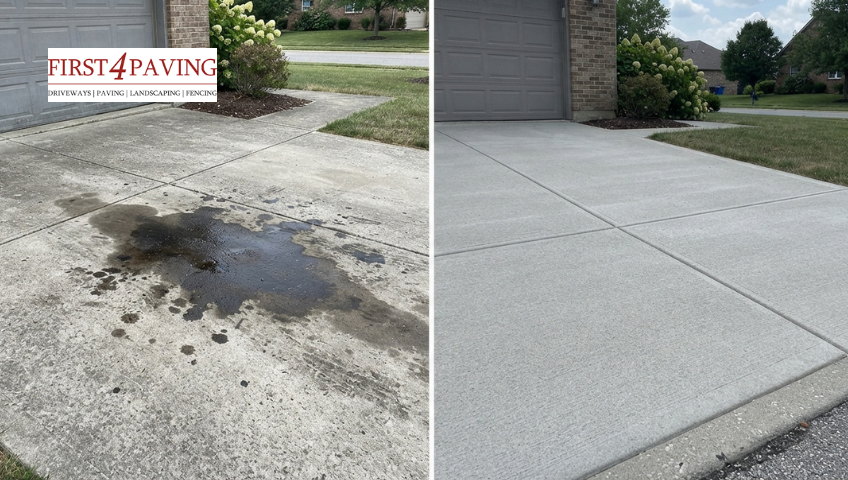
To remove an oil stain from a driveway, first absorb any fresh oil with cat litter or cornstarch, then scrub the area with a baking soda paste or Dawn dish soap using a stiff brush. For old, set-in stains, apply a degreaser or poultice, let it sit for several hours, then scrape and rinse. Repeat as needed, since older stains often take more than one treatment.
A fresh spill or a stain that’s been sitting for months- either way, most driveways can be brought back to looking clean with a few household products and some elbow grease. This guide covers exactly how to remove an oil stain from a driveway, or simply clean oil from one that’s picked up a mark over time, with separate methods for fresh spills and old, set-in stains, and guidance depending on whether your driveway is concrete, asphalt, or block paving.
Why Oil Stains Are Hard to Remove?
Concrete and asphalt are both porous materials, meaning they act like sponges rather than solid, sealed surfaces. When oil spills onto a driveway, it doesn’t just sit on the surface; it seeps into the tiny pores beneath the surface. The longer it sits, the deeper it travels, which is why a fresh spill wiped up in minutes is far easier to deal with than a stain that’s been baking in the sun for weeks or months. This is also why a quick rinse or a single pressure wash often isn’t enough on its own: it can clean the surface while oil trapped underneath slowly resurfaces later.
What things will you need to remove an oil stain from a driveway?
- Cat litter, cornstarch, or sawdust (as an absorbent)
- Baking soda
- Dawn dish soap or a laundry detergent
- A stiff-bristled scrub brush
- A garden hose (or pressure washer, optional)
- A concrete-safe degreaser (e.g., Zep, Oil Eater, or Purple Power) for tougher stains
- A plastic scraper
- Rubber gloves and eye protection, especially if using a degreaser
How to Remove an Oil Stain from a Driveway: Methods That Actually Work
Whether you’re tackling a fresh spill yourself or following the same routine most driveway contractors in Enfield rely on, the methods below cover every stage of oil stain removal, from a same-day spill to a mark that’s been sitting for months.
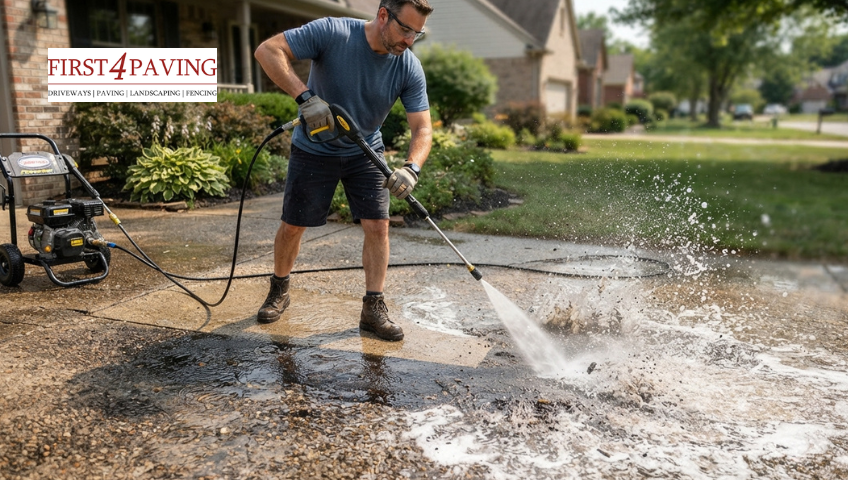
Method 1: Treat Fresh Oil Stains Immediately
If you’ve just noticed the spill, acting fast makes the rest of the process much easier, since fresh oil hasn’t had time to soak deep into the concrete yet.
- Pour a generous layer of cat litter, cornstarch, or sawdust directly over the stain.
- Let it sit for at least 20–30 minutes to soak up the oil. For a larger spill, leave it overnight.
- Sweep up the absorbent material with a broom and dispose of it in the trash. Don’t rinse it down a storm drain, since it now contains oil.
- Once the excess oil is absorbed, scrub the remaining residue with dish soap and warm water, then rinse with a hose.
Method 2: Remove Old, Set-In Oil Stains (Baking Soda Paste Method)
Old stains have already soaked into the concrete’s pores, so they need something that can break down the oil rather than just absorb it.
- Mix baking soda with a small amount of water into a thick paste (about the consistency of peanut butter, so it stays in place rather than running off)
- Spread the paste generously over the stain, covering it completely.
- Let it sit for 30 minutes to an hour.
- Scrub firmly in a circular motion using a stiff-bristled brush.
- Rinse thoroughly with a hose.
- Repeat if any discolouration remains; older stains often need two or three treatments.
Method 3: Using Dawn Dish Soap
Dawn is a popular choice for oil stains because it’s specifically formulated to cut through grease (which is also why it’s used to clean oil off wildlife after spills).
- Apply Dawn dish soap directly onto the stain.
- Add a small amount of warm water and work it into the stain with a stiff brush.
- Let it sit for 10–15 minutes; don’t let it dry on the surface.
- Scrub again, then rinse thoroughly with water.
This method is gentle enough to use on asphalt as well, unlike stronger chemical degreasers.
Method 4: Using a Concrete Degreaser (For Stubborn Stains)
When baking soda or dish soap isn’t enough, a concrete-safe degreaser is the next step up.
- Choose a degreaser made for concrete (e.g., Zep Driveway & Concrete Cleaner or Oil Eater).
- Apply per the product label; most recommend diluting for lighter stains.
- Let it sit for the recommended time (usually 1–15 minutes; check the label).
- Scrub vigorously with a stiff or steel brush.
- Rinse away thoroughly with water.
Note: oil that has deeply penetrated the surface can resurface within 24 hours after cleaning. If this happens, simply repeat the process.
Method 5: Remove Oil Stains Without a Pressure Washer
You don’t need a pressure washer to get rid of oil stains; it just takes a bit more manual scrubbing.
- Apply your chosen treatment (baking soda paste, dish soap, or degreaser) as described above.
- Instead of pressure washing to rinse, use a stiff push broom or scrub brush with a bucket of hot, soapy water.
- Rinse using a regular garden hose on a strong spray setting, sweeping water toward a drain or grassy area.
- For large or stubborn areas, repeat the scrub-and-rinse cycle two or three times rather than relying on higher pressure.
This approach takes a little more elbow grease, but works just as well for most household-sized stains.
Method Comparison Table
| Method | Best For | Time Needed |
|---|---|---|
Cat litter/cornstarch | Fresh spills | 20–30 min |
Baking soda paste | Light to moderate stains | 30–60 min |
Dawn dish soap | Fresh to moderate stains, asphalt-safe | 10–15 min |
Concrete degreaser | Stubborn, older stains | 1–15 min + scrubbing |
Poultice (degreaser + absorbent) | Deep, long-set stains | 5–12 hours |
| Pressure washing + degreaser | Large or widespread areas | 15 min soak + wash |
Removing Oil Stains from Concrete and Asphalt
Both surfaces respond to the same core methods covered above, but a few adjustments matter depending on which one you’re working with:
- Concrete: The most forgiving surface for this job. It tolerates baking soda, dish soap, and most degreasers well and can handle longer dwell times and firmer scrubbing than the other two surfaces without risk of damage. Because concrete is more porous than asphalt, older stains may need two or three repeat treatments before they fully lift.
- Asphalt (tarmac): More sensitive to harsh chemicals and high heat, so stick to dish soap and gentler scrubbing, the same low-pressure approach used for routine tarmac cleaning; strong solvents can soften or discolour the surface. Avoid scrubbing too aggressively, since this can dislodge the loose stone aggregate on the surface. On a hot day, treat the stain in the shade or during a cooler part of the day, since softened tarmac is easier to mark or dent.
- For a light or fresh mark on tarmac specifically, plain washing-up liquid diluted in warm water, applied with a soft-bristled broom, is often enough on its own. For an older or greasier mark, the best oil remover for tarmac is typically a dedicated tarmac-safe degreaser rather than a generic concrete product, since it won’t soften or discolour the surface.
How to Remove Oil Stains from Block Paving
Block paving needs a slightly different approach than solid concrete or asphalt. Because it’s made of individual blocks with sand-filled joints between them, oil can spread sideways into the gaps and soak into each block, and overly aggressive scrubbing or jet washing can wash out the joint sand.
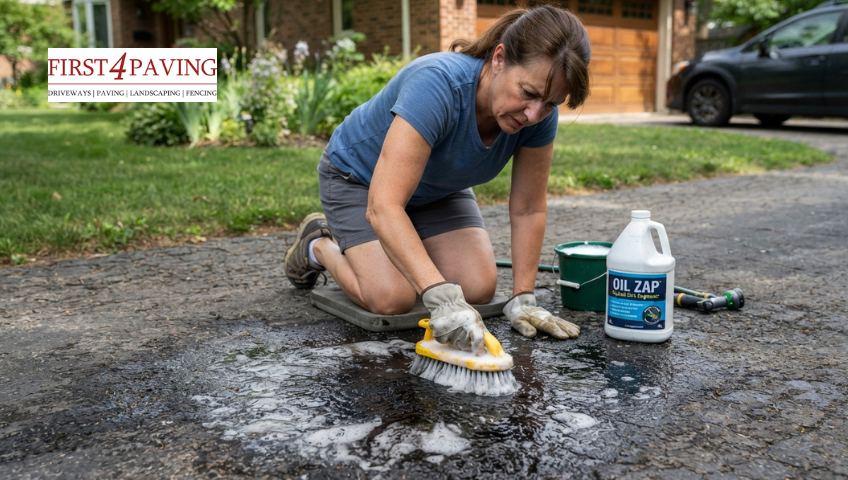
- Blot immediately if the spill is fresh. Lay paper towels or an absorbent (cat litter, sawdust) over the stain to soak up as much oil as possible before it spreads into the joints.
- Apply a cleaning agent and let it work. The best oil remover for block paving is usually a specialist block-paving product, since it’s formulated to work around jointing sand, but a degreasing dish soap or WD-40 can help with lighter stains. Whatever you use, let it sit for at least an hour, since block paving often needs longer dwell time than solid concrete. If you don’t have a pressure washer, this whole method works just as well with a hose and a stiff brush, following the same hand-scrubbing approach described earlier.
- Scrub gently with a stiff brush, working in the direction of the joints rather than across them, to avoid disturbing the jointing sand.
- Rinse with a hose rather than a pressure washer where possible. Jet washing an untreated stain can drive the oil deeper into the block rather than lifting it out; always treat the stain first, then rinse.
- Repeat as needed. Block paving stains, especially older ones, often take two or three treatments before they fully lift.
- Top up joint sand, seal the joints, and keep removing moss and weeds from block paving afterwards, since disturbed joints are more prone to both.
Will WD-40 Remove Oil Stains from Block Paving?
Yes, to an extent. WD-40 can help loosen and lift oil stains, especially fresh ones, because it’s designed to break down and displace oil. Spray it directly onto the stain, let it sit for 5-10 minutes, then scrub with a stiff brush and rinse with water. However, WD-40 itself contains mineral oil, so avoid overspray onto unaffected areas of the paving, as it can cause its own light staining. For older or more stubborn stains, a dedicated block-paving oil remover will deliver more reliable results than WD-40 alone.
How to Prevent Future Oil Stains
- Sealing a driveway with a concrete or asphalt sealant creates a barrier that prevents oil from soaking in and is best done right after a deep clean, while the surface is fully dry.
- Use a drip pan or absorbent mat under any vehicle known to leak.
- Clean spills immediately rather than letting them sit; the faster you act, the easier the cleanup.
At First4 Paving, as professional Driveway installers, we know a stained, tired-looking driveway can take the shine off an otherwise great-looking home, and sometimes a clean isn’t enough to fully restore it, especially if the surface is cracked, uneven, or coming to the end of its life. That’s where we can help. We provide driveway services including: Block paving, Resin driveways, Tarmac driveways, Gravel & shingles. Whether you need a stubborn stain sorted or you’re ready for a brand-new driveway altogether, our team covers Enfield and Hertfordshire and is happy to help. Contact us today for a free quote.
Conclusion
Most oil stains, even ones that have been sitting for months, will lift with a bit of patience and the right combination of absorbent, cleaner, and dwell time. If you’ve worked through the steps above two or three times and a faint mark still won’t budge, it’s worth calling in a professional driveway cleaning service rather than reaching for a stronger chemical, since overly harsh products can damage the surface more than the stain itself. And once the driveway’s clean, a coat of sealant ensures the next spill wipes away in minutes instead of turning into another afternoon project.
FAQs
Can I use bleach to remove an oil stain?
Not recommended: bleach doesn’t break down oil effectively and can discolour concrete or damage paving.
Does vinegar work on oil stains?
Yes, for lighter stains. Pour vinegar directly onto the stain, let it fizz and sit for about 15 minutes, then scrub and rinse. It’s a gentler, eco-friendly option, though less effective than a degreaser on older stains.
What PSI pressure washer should I use for oil stains?
Most concrete driveways can handle 2,500–3,000 PSI. Always pre-treat the stain with a degreaser first; full pressure on an untreated stain can drive oil deeper into the surface rather than lifting it out.
Does the type of oil matter (motor oil vs transmission fluid vs diesel)?
Not significantly for the removal method: all petroleum-based fluids respond to the same absorb-then-degrease approach. Diesel and transmission fluid tend to spread and soak in faster than motor oil, though, so treating the spill quickly matters even more.
Can oil stains permanently damage a driveway?
Not usually structurally, but they can discolour the surface and prevent sealants or paint from bonding properly if not fully removed.