
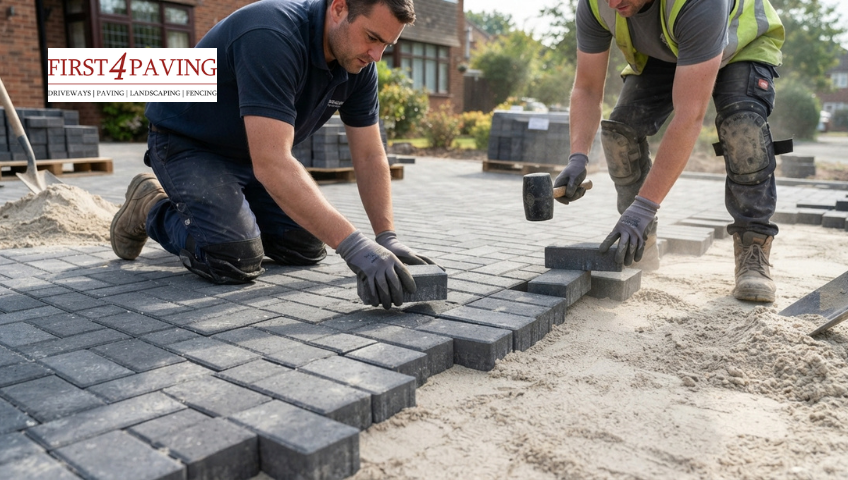
A block paving driveway is made up of individual concrete or clay blocks, laid closely together in a chosen pattern to form a strong, durable surface. Unlike a single poured surface such as concrete or tarmac, block paving is built from smaller interlocking units, giving it a distinctive, structured look that many homeowners prefer.
Getting the result right relies on several layers beneath the surface coming together correctly before a single block is laid. Knowing what is block paving? A carefully built system of layers rather than just a decorative top surface- helps explain why even the most attractive pattern will eventually shift, sink, or crack if the foundations are wrong.
This guide walks through the entire process of laying a block-paving driveway from start to finish, covering the required tools, the groundwork, and the steps for laying, cutting, and properly finishing the blocks. Whether you are planning to tackle the project yourself or simply want to understand what a professional installation entails, this breakdown covers everything that goes into building a driveway that lasts.
Tools and Materials You Will Need
- Block paving units (in your chosen colour and pattern)
- Type 1 MOT sub-base material
- Sharp sand for the bedding layer
- Kiln-dried sand for joint filling
- Edge restraints (concrete, timber, or block kerbs)
- Weed membrane
- Plate compactor
- Spirit level and string line
- Rubber mallet
- Block splitter or angle grinder for cutting
Understanding Block Paving Layers
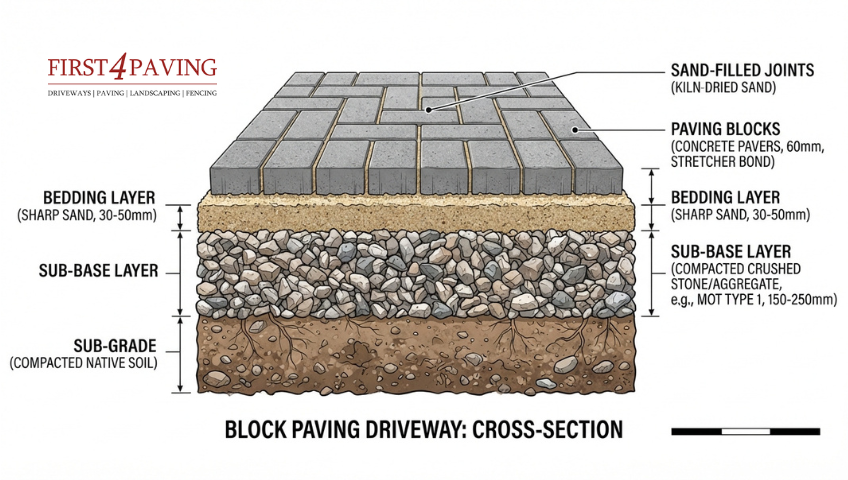
A block paving driveway is built up of several distinct layers, each playing a specific role in the driveway’s strength and drainage. From the ground up, this typically includes the sub-base, a bedding layer of sharp sand, the paving blocks themselves, and finally the jointing sand that locks everything together. Driveway experts agree that getting the depth and compaction of each layer right is what determines whether the driveway lasts for decades or starts to fail within a few years.
How to Lay a Block Paving Driveway | Step by Step
Following the correct block paving steps in order is essential to achieving a durable, professional finish, from initial planning through to the final compaction and jointing.
Step 1: Planning and Measuring the Area
Start by marking out the full area of the driveway using string lines and pegs. Take accurate measurements of length and width, and decide on a laying pattern- herringbone, basketweave, or stack bond- as this affects how many blocks you will need and how they should be cut at the edges. At this stage, it is also important to plan the fall of the driveway, a slight slope of around 1 in 60 away from the house, to ensure rainwater drains properly rather than pooling on the surface.
Step 2: Excavation
Once the area is marked out, excavate to a depth that accounts for the sub-base, sand bed, and block thickness combined, typically around 200-250mm in total. Before digging, check for any buried services such as gas, water, or electricity lines running through the area. Removing turf, soil, or old paving at this stage also gives a clean base to work from.
Step 3: Installing the Sub-Base
Lay the Type 1 MOT sub-base in layers of no more than 100mm at a time, compacting each layer thoroughly with a plate compactor before adding the next. A well-compacted sub-base is one of the most important factors in preventing the driveway from sinking or shifting later, so this step should not be rushed.
Step 4: Adding Edge Restraints
Install edge restraints along the driveway perimeter to hold the blocks in place and prevent them from spreading sideways over time. Good block paving edging is what keeps the entire surface locked together, so this step should never be skipped, even on smaller driveways. Concrete edging is the most common choice for durability, though timber or block curbs can also work depending on the overall design.
Step 5: Laying the Sand Bed
Spread a layer of sharp sand over the compacted sub-base, screeding it to an even depth of around 30mm to 50mm. Sand in block paving plays two key roles: sharp sand acts as the bedding layer that lets blocks settle evenly, while kiln-dried sand is later used to fill and lock the joints once laying is complete.
Step 6: Laying Block Paving
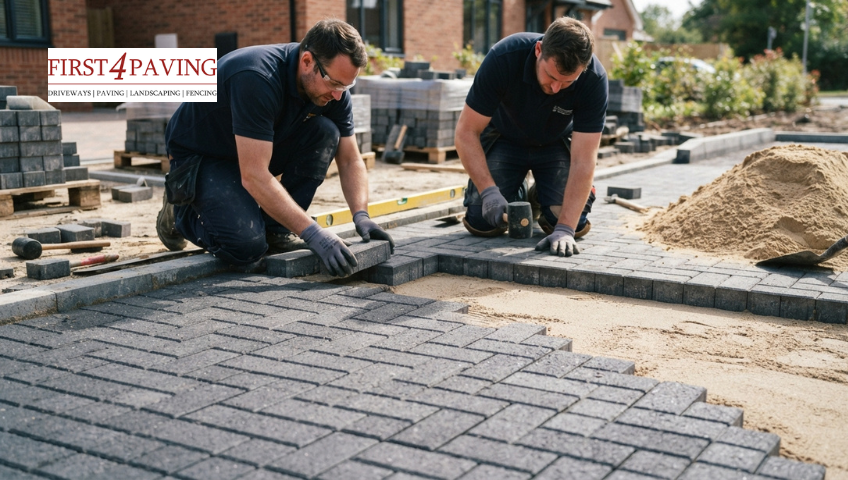
Begin laying the blocks from a fixed straight edge, working outward in your chosen pattern. Place each block gently onto the sand bed, using a rubber mallet to tap it level with its neighbours. Check levels regularly with a spirit level to ensure the surface stays level and follows the intended fall for drainage.
Step 7: Cutting Blocks for Edges and Borders
As you reach the edges of the driveway, blocks will need to be cut to fit neatly into gaps and corners. A block splitter works well for straight cuts, while an angle grinder is better suited to more intricate shapes. Taking time over these cuts makes a noticeable difference to the finished look of the driveway.
Step 8: Compacting and Jointing
Once all the blocks are laid, run a plate compactor over the entire surface to bed the blocks firmly into the sand below. Afterwards, brush kiln-dried sand into the joints between the blocks, then compact the surface again to help the sand settle fully and lock the blocks together. Sealing the joints afterwards helps keep that sand in place.
Step 9: Final Checks and Clean-Up
Sweep away any excess sand and check the surface for uneven areas or blocks that may need adjusting. It is also worth checking that water flows correctly toward the intended drainage point after a light hose test. Check the joints again after the first few heavy rains and top up any sand, as this is the best way to stop moss and weeds taking hold.
Common Mistakes to Avoid
Here are the common mistakes u should avoid while laying a block paving Driveway
- Skipping proper compaction of the sub-base, leading to sinking over time
- Getting the fall wrong, causing water to pool on the surface
- Leaving out edge restraints, which allows blocks to shift and spread
- Rushing the jointing process, leaving blocks loose or prone to movement
How Long Does It Take to Lay Block Paving Driveway?
For a standard driveway, the process typically takes 2 to 4 days, depending on the area size and the complexity of the chosen pattern. For those requiring significant excavation and drainage work, it may take longer, depending on the driveway installation time.
When You Should Call a Professional
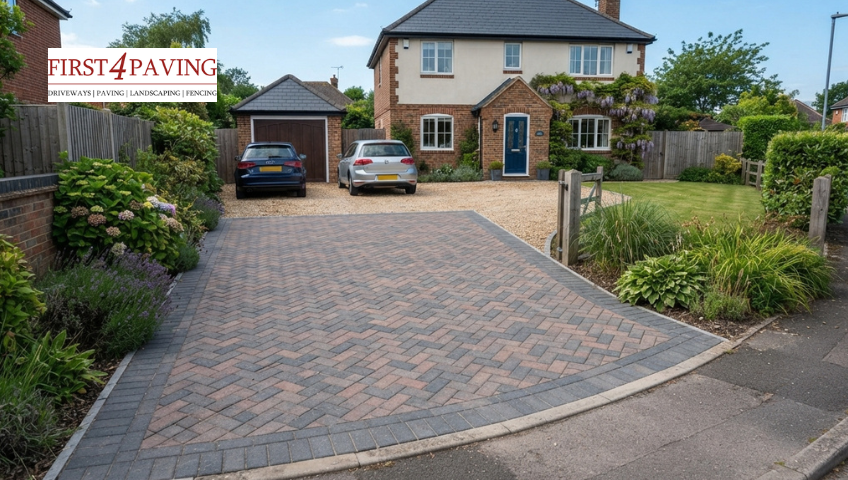
Laying a block-paving driveway is achievable as a DIY project for smaller areas, particularly for those with some groundwork experience, provided time and care are taken during the groundwork stages. However, getting the sub-base compaction, drainage falls, and edge restraints right is critical to the long-term performance of the driveway, and small errors at this stage often only become apparent months or years later, once the surface begins to shift or settle unevenly.
At First4 Paving, as professional driveway installers, we provide block paving services in Enfield and the surrounding areas, with experience handling projects of all sizes, from smaller domestic driveways to larger, more complex layouts. Working with an established local installer helps ensure your block paving is laid correctly from the groundwork up, using the right materials and techniques at each stage, so the finished driveway performs well and keeps its appearance for years to come.
Conclusion
Laying a block paving driveway involves far more than simply arranging blocks on the surface. From accurate excavation and sub-base compaction to correct drainage falls and careful jointing, each stage plays a part in how well the finished driveway performs over time. Taking the process step by step, and paying close attention to the groundwork in particular, helps ensure a durable, attractive result that lasts for years to come.
If you are considering a block paving driveway for your property, First4 Paving can help bring your project to life with expert installation from start to finish. Contact us today to discuss your requirements and get a personalised quote.
FAQs
Can the Same Process Be Used for a Block Paving Path?
Yes, the same foundational principles apply when laying a block paving path, though the excavation depth and sub-base thickness can often be reduced slightly, since paths carry foot traffic rather than vehicle loads.
What type of sand is used in block paving?
Two types of sand are typically used: sharp sand for the bedding layer beneath the blocks, and kiln-dried sand for filling the joints once the blocks are laid.
How long does a block paving driveway last?
With proper installation and regular maintenance, a block paving driveway can last between 20 and 30 years, which is longer than the 15–20 years typical of tarmac.
Can I lay a block paving driveway myself?
It is possible to lay a block paving driveway yourself, particularly for smaller areas, but getting the sub-base compaction, drainage falls, and edge restraints right is essential for the driveway to perform well over the long term.