

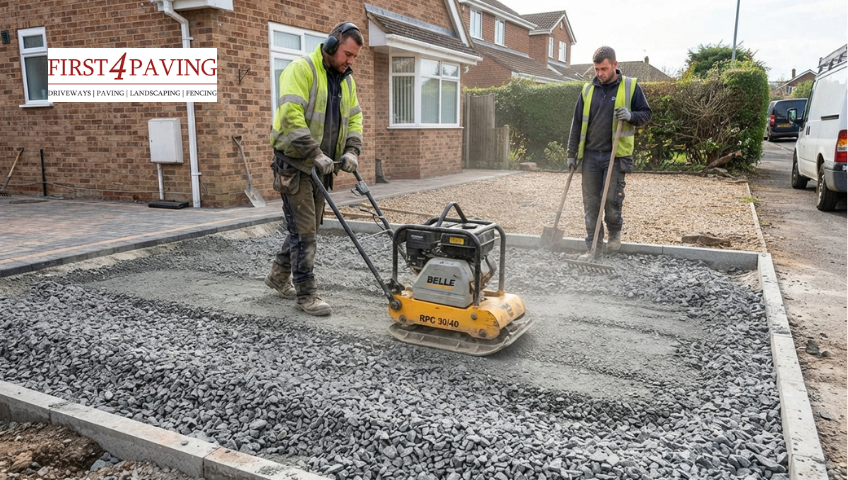
Installing a new driveway is one of the most impactful improvements you can make to your property’s curb appeal, but if you’re planning the work around a busy schedule, timing matters. On average, a new driveway takes anywhere from 2 to 7 days to install in Enfield, depending on the size, material, and condition of your existing surface.
In this guide, we’ll walk you through everything that influences how long a driveway installation takes, from the size and material you choose to ground conditions and weather. We’ll also break down the entire installation process, stage by stage, so you know exactly what happens on-site and how long each part typically takes, along with tips for keeping your project on schedule and questions to ask before hiring an installer.
How Long Does Each Driveway Type Take To Install?
Installation time varies significantly depending on the material you choose. Below is a breakdown of how long each driveway type typically takes, based on real-world timelines from driveway experts in Enfield.
Block Paving Driveways
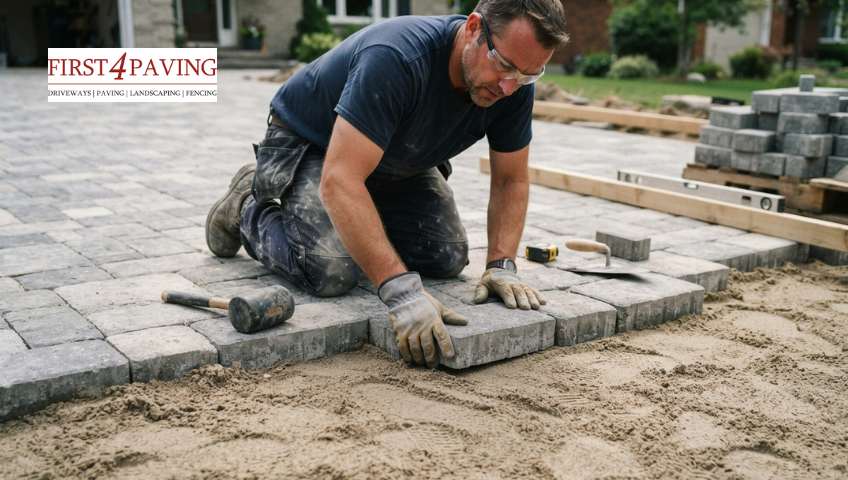
Block paving is one of the most popular driveway choices in the UK, known for its durability and range of design options. Because each block is laid and cut by hand, installation typically takes 3–5 days for an average-sized driveway. Larger or more intricate patterns can extend this timeframe further.
Resin Bound Driveways
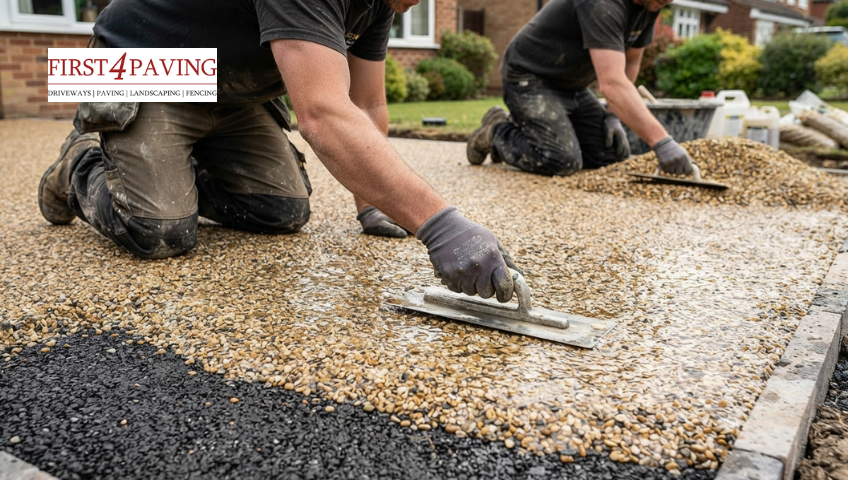
Resin bound surfaces offer a smooth, modern finish and are laid relatively quickly compared to block paving. Installation usually takes 2–3 days, but the surface needs an additional 24–48 hours of curing time before it’s ready for vehicle use.
Concrete / Pattern Imprinted Driveways
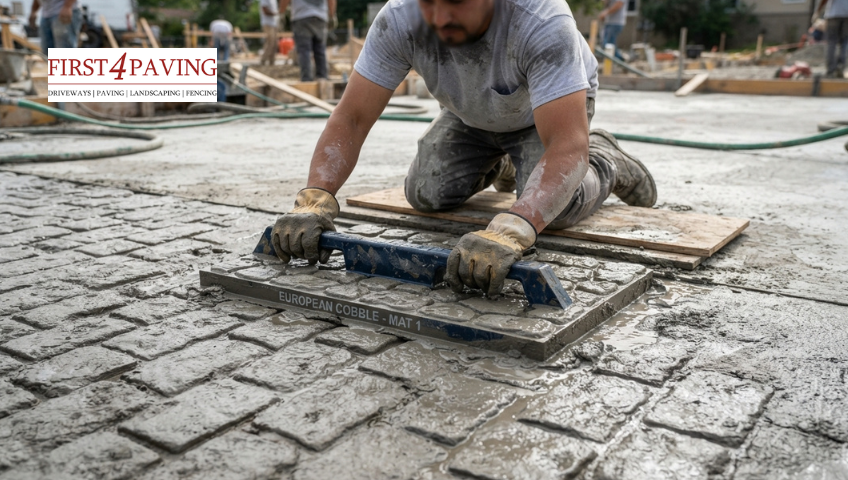
Concrete and pattern imprinted driveways involve pouring, levelling, and often stamping a design into the surface before it sets. This process typically takes 3–5 days, plus additional curing time before the driveway is ready for regular use.
Tarmac Driveways
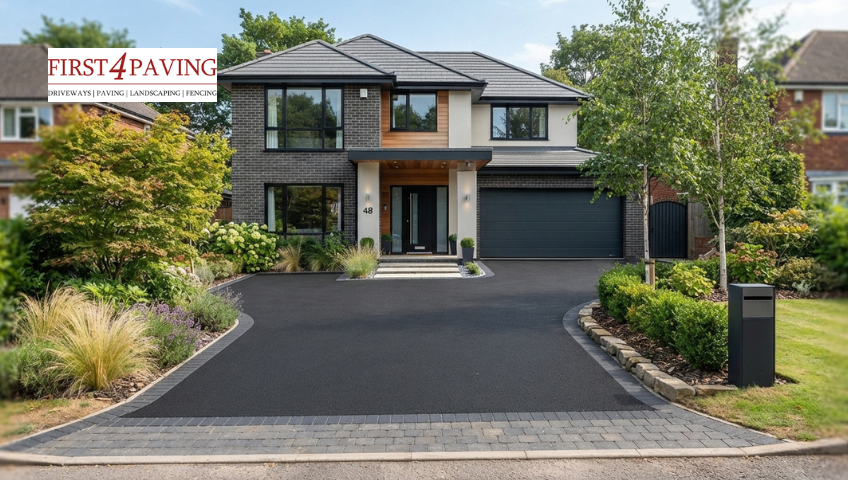
A tarmac driveway is one of the fastest driveway materials to install, as it’s poured and rolled directly onto the prepared base. Most tarmac driveways are completed within 1–2 days, making them a popular choice for homeowners seeking a quicker turnaround. If you’re torn between speed and long-term durability, our block paving vs tarmac driveway comparison covers the trade-offs in full.
Gravel Driveways
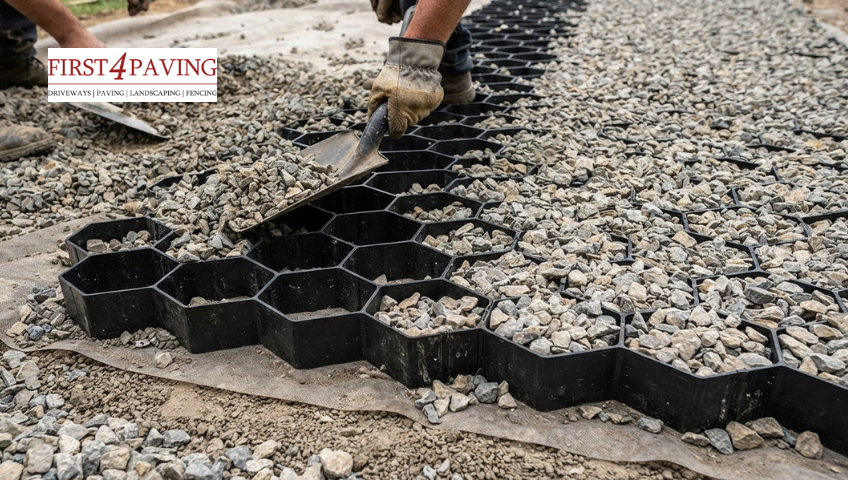
Gravel driveways are among the simplest and quickest to install, since they don’t require extensive laying or curing time. On average, installation takes 1–2 days, though proper edging and drainage work can add a little extra time.
How To Get Your Driveway Installed Faster?
Choose Your Material Carefully
Tarmac and gravel install faster than block paving or resin, but speed should be weighed against cost and lifespan when choosing the best type of driveway for your home.
Clear Site Access in Advance
Make sure vehicles and equipment can reach the site easily. Poor access on the day can cause delays before work even begins.
Schedule During Drier Months
Spring and summer generally offer more predictable weather for groundwork and curing, reducing the risk of weather-related setbacks.
Hire Experienced Contractors
A skilled team works more efficiently and avoids costly delays caused by mistakes, keeping your project on schedule.
Get All Decisions Finalised Before Work Starts
Confirm your material, design, and colour choices in advance so the team isn’t waiting on approvals mid-project.
What Are The Factors That Affect Driveway Installation Time?
Size and Shape of the Driveway
Larger driveways naturally take longer to prepare and lay than smaller, single-car spaces. Irregular shapes or curved layouts also add time, as they require more precise cutting and fitting of materials.
Type of Material Used
Different surfaces have different installation timelines. Block paving, for example, takes longer to lay by hand than tarmac, which can be poured and rolled more quickly. Resin bound driveways require a specific curing window before they can be walked or driven on.
Ground Conditions and Preparation Work
If the ground is uneven, poorly drained, or has a high clay content, extra groundwork will be needed before the base layer is laid. This can add a day or more to the overall project.
Weather Conditions
Rain, frost, and extreme heat can all delay driveway installation. Excavation and sub-base work are particularly weather-sensitive, and materials such as resin and concrete require dry, stable conditions to cure properly.
Access to the Site
Driveways with limited access, such as narrow side entrances or restricted parking for machinery, can slow material delivery and equipment use, extending the timeline.
New Install vs. Replacement
If you’re replacing an old driveway, the team will first need to break up and remove the existing surface. This takes longer than installing a driveway on a completely clear plot.
🏗️ Planning a new driveway?
Tell us your site, material, and timeline, and First4Paving will give you an accurate installation schedule up front, no surprises once work starts.
What Could Be The Warning Signs of a Poorly Installed Driveway?
A driveway installed too quickly may show signs of trouble down the line, including:
- Uneven or sinking surfaces due to inadequate sub-base compaction
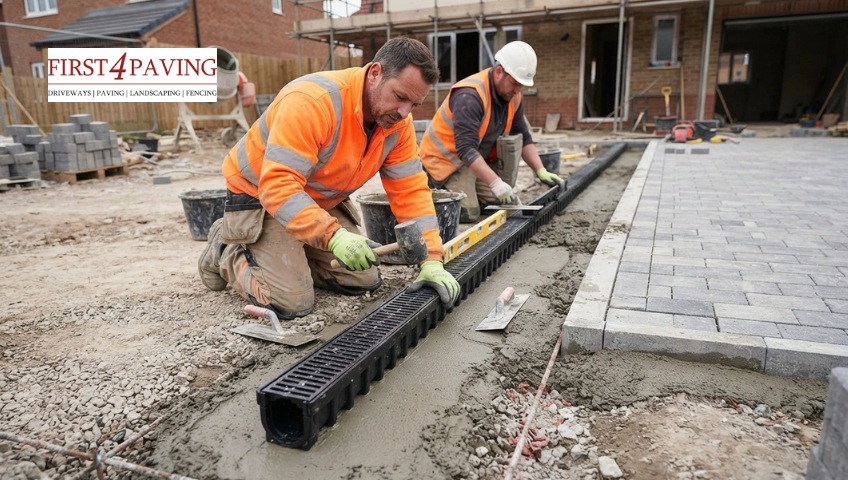
- Poor drainage leading to pooling water, especially after rainfall
- Cracking in concrete or resin surfaces from insufficient curing time
- Loose or shifting block paving, particularly around edges
- Weeds or grass growing through joints, often a sign of poor jointing or missing weed-suppression membrane
- Visible gaps between blocks or pavers, indicating rushed or inconsistent laying
- Uneven colour or patchy finish on resin or tarmac surfaces, often caused by mixing or application errors
- Edging stones or curbs coming loose, suggesting they weren’t properly bedded or secured
- Cracks appearing within the first few months, a common sign the sub-base wasn’t compacted properly or given enough time to settle
- Water pooling near the house or boundary instead of draining away, which can point to incorrect surface gradient
🛠️ A reputable installer will never skip stages like sub-base preparation or curing time, even if it means the project takes a day or two longer. That’s why it’s worth choosing an experienced driveway company in Enfield rather than the cheapest or fastest quote available. At First4Paving, we take every stage seriously, from groundwork to finishing touches across block paving and resin bound installations alike.
Conclusion
Driveway installation time depends on the material, size, and ground conditions of your project, ranging from just a day for tarmac or gravel to several days for block paving, resin, or concrete once curing is factored in. Knowing what to expect at each stage helps you plan with confidence and avoid rushed, poor-quality work. Choosing an experienced installer also plays a big role in keeping your project on schedule while ensuring the finished result stands the test of time. Whether you’re upgrading your existing driveway or starting from scratch, a little planning ahead goes a long way toward a smooth installation.
FAQs
How long does a block paving driveway take to dry or cure?
Block paving doesn’t require curing like resin or concrete, but it’s best to avoid heavy vehicle traffic for the first 24–48 hours to allow the joints to settle.
Can I walk on my new driveway straight away?
This depends on the material. Block paving and gravel can usually be walked on almost immediately, while resin and concrete typically need at least 24 hours.
How soon can I drive on it?
Most driveways need 48–72 hours to settle before they can support vehicle weight, though this varies by material; always check with your installer.
Does rain delay driveway installation?
Yes. Rain can affect excavation, sub-base compaction, and the curing of materials like resin and concrete, often pushing the timeline back by a day or more.
When is the best time of year to install a driveway?
Late spring through early autumn (April to September) is generally the best time, as drier ground and warmer temperatures help with excavation and curing. Winter installation is possible, but frost and rain can extend timelines and affect the finish.