

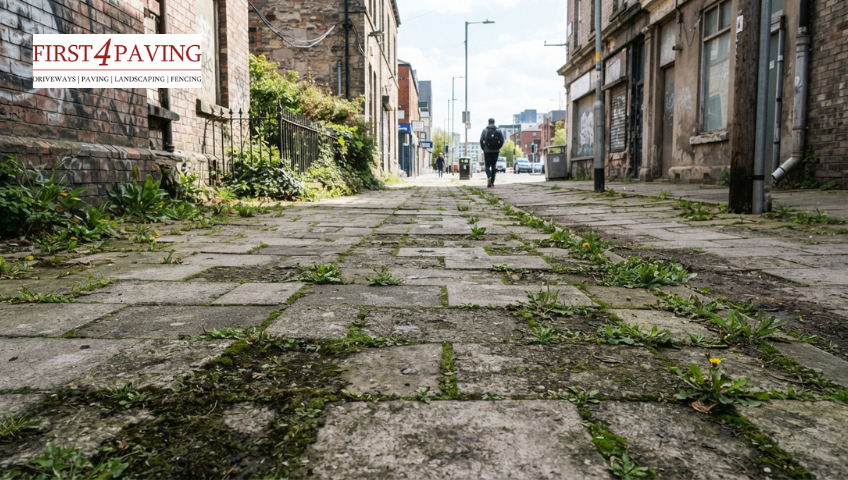
How to Remove Moss and Weeds From Block Paving and Keep It Clean
If you’ve noticed green patches creeping across your driveway or weeds pushing up between the blocks, you’re not alone; it’s one of the most common issues block paving owners face. The quickest way to deal with it is to treat the affected areas with a moss killer or weed treatment, rinse the surface clean, and top up the jointing sand once it’s dry. From there, a bit of regular maintenance is usually enough to keep it from coming back.
In this guide, we’ll explain why moss and weeds appear on block paving in the first place, then give clear, step-by-step instructions for removing both. We’ll also cover the long-term maintenance steps from re-sanding to sealing that make the biggest difference in keeping your driveway clean for good, plus answers to some of the most common questions homeowners ask us about moss and weed control.
Why Moss and Weeds Grow in Block Paving
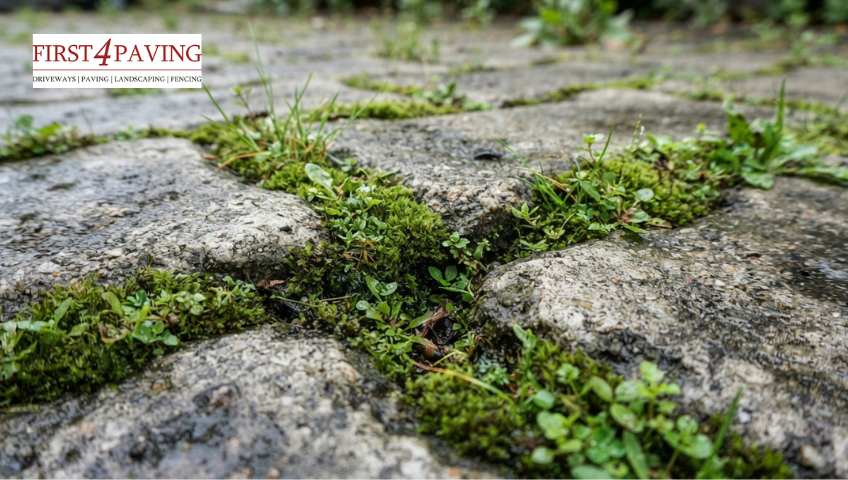
Block paving is naturally prone to moss and weed growth because of the small gaps between each block. Over time, these joints can become the perfect environment for unwanted growth to take hold.
A few common causes include:
Damp, Shaded Areas
Moss thrives in moisture and low sunlight, which is why it spreads fastest on north-facing driveways or areas shaded by fences, trees, or walls. These spots stay damp for longer after rain, giving moss the ideal conditions to establish itself and spread across the surface.
Worn or Missing Jointing Sand
Jointing sand is what locks the blocks together and keeps the gaps between them sealed. Over time, weather, foot traffic, and regular cleaning can wear this sand away. Once it erodes, small gaps open up between the blocks, the perfect landing spot for windblown weed seeds to settle and take root.
Organic Debris Buildup
Leaves, dirt, grass clippings, and other organic matter that collect on the surface don’t just look untidy; as they break down, they create a layer of decomposing material that acts almost like compost, feeding moss and weed growth in the joints below.
Poor Drainage
If water doesn’t drain properly and pools on the surface, it creates constant damp conditions that speed up moss growth. Poor drainage is often linked to uneven paving, blocked drainage channels, or debris build-up that prevents water from escaping.
Understanding the cause helps you treat the problem properly, rather than just clearing the surface temporarily.
How to Remove Moss From Block Paving
Tools and Materials You’ll Need
Before you start, gather the following:
- A stiff outdoor brush or wire brush
- A moss killer (or a natural alternative like diluted vinegar)
- A pressure washer (optional, but effective)
- Gloves and eye protection
- Jointing sand for refilling gaps afterward
Step-by-Step Removal Process
Step 1: Brush Off Loose Moss
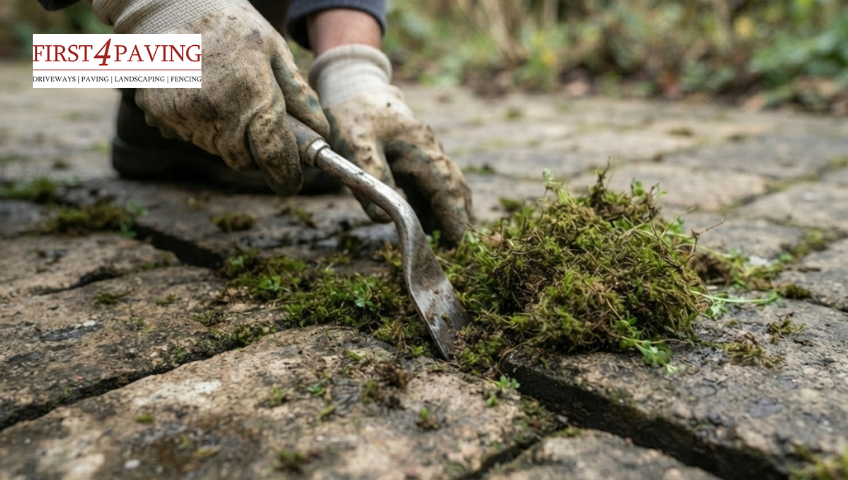
Use a stiff brush to remove as much surface moss as possible before applying any treatment. This helps the treatment reach the remaining moss more effectively rather than sitting on top of a thick layer. Focus on areas between the blocks, where moss tends to build up thickest.
Step 2: Apply a Moss Killer
Spray or pour the treatment evenly across affected areas, making sure it reaches into the joints where moss tends to take hold most stubbornly. Choose a dry day for this step, as rain shortly after application can wash the treatment away before it has a chance to work.
Step 3: Leave It to Work
Most treatments need to sit for several hours, or even overnight, to kill moss at the root. Check the product instructions for exact timing. Avoid walking or driving over the treated area during this time to avoid disturbing the treatment.
Step 4: Rinse or Pressure Wash
Once the moss has died back, rinse the area thoroughly or use a pressure washer on a moderate setting to clear away residue. Be careful not to hold the pressure washer too close to the surface, as it can dislodge jointing sand along with the debris.
Step 5: Re-Sand the Joints
Once the surface is dry, brush new jointing sand into any gaps to help prevent regrowth. If using a polymeric variety, give the sand a light water spray afterward, as this helps it set and bind the joints more securely.
How to Remove Weeds From Block Paving
Weeds pushing through block paving joints are just as common as moss, and most cases can be handled with the right approach and a little consistency. The method you choose usually depends on how established the growth is; you can handle light patches manually, while heavier growth may need targeted treatment. If you’re ever unsure which approach suits your driveway, a driveway expert in Enfield can take a look and point you in the right direction.
Manual Removal
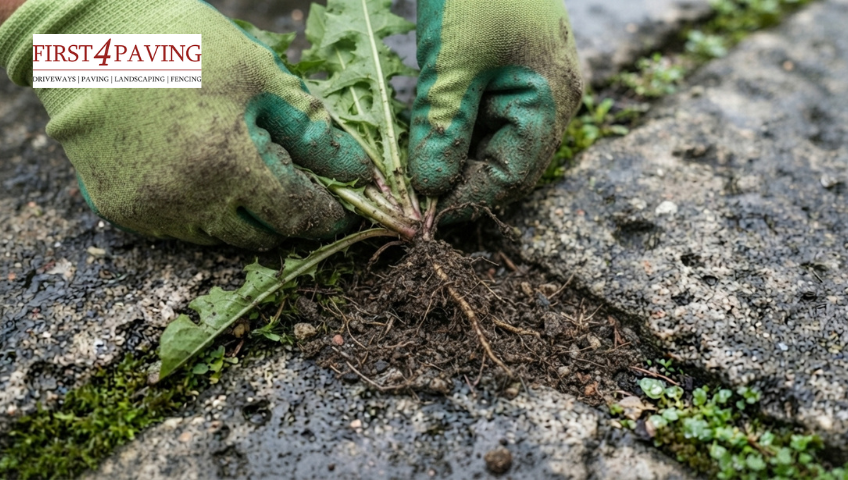
For light weed growth, hand-pulling is often the simplest solution. A weeding tool or old knife can help lift weeds out from between the blocks, roots and all, without damaging the surrounding paving. Pulling weeds after rainfall or watering the area beforehand can make this easier, as softened soil lets roots come away more cleanly rather than snapping off and regrowing.
Check your driveway every few weeks for new growth, since catching weeds early, before they’ve established deep roots, makes manual removal faster and more effective. For scattered, low-growth weeds, this approach is often all you need, and it avoids chemical treatment altogether.
Chemical and Natural Weed Killers
For larger areas or more stubborn growth, a treatment may work better than manual removal. Here’s how the most common options compare:
| Method | Effectiveness | Eco-Friendly | Best For |
| Boiling water | Moderate | Yes | Small, isolated patches |
| Vinegar/salt spray | Moderate | Yes | Light, early-stage growth |
| Commercial weed killer | High | No | Larger driveways with heavy growth |
| Pressure washing | High (short-term) | Yes | Combined with re-sanding for best results |
How to Keep Block Paving Clean and Weed-Free Long-Term
Removing moss and weeds is only half the job; keeping them from coming back is what really protects your driveway.
Re-Sanding the Joints
Topping up jointing sand (ideally polymeric sand, which hardens once wet) helps lock the blocks in place and makes it much harder for weed seeds to take root.
Sealing the Paving
A quality sealant adds a protective layer that reduces moisture absorption and makes it much harder for moss and weeds to establish themselves, which is why sealing block paving to stop weeds is the most reliable long-term fix.
Regular Maintenance
A few simple habits go a long way:
- Sweep the driveway regularly to clear leaves and debris
- Check joints every few months and top up sand as needed
- Rinse the surface periodically, especially after autumn leaf fall
- Re-seal every couple of years, depending on wear
When to Call a Professional
If moss and weeds keep returning despite regular maintenance, or if your block paving shows signs of wear like loose blocks or badly eroded joints, it may be time to call professional paving contractors. Persistent regrowth often signals that the underlying jointing sand has broken down significantly, or that drainage issues keep the surface damp- problems surface-level treatments alone can’t fully resolve. A professional clean and re-sand gets right to the root of the issue rather than just masking it for a few weeks.
At First4 Paving, we offer driveway cleaning services designed to give your paving a long-term refresh, not just a quick fix. Our team can assess the condition of your block paving, identify what’s driving the regrowth, and recommend the right combination of treatment, re-sanding, and sealing to keep it looking its best for years to come.
Struggling to keep your driveway moss and weed-free? Contact us for professional cleaning, re-sanding, and sealing services that keep your block paving looking its best year-round.
Conclusion
Moss and weeds are a near-inevitable part of owning block paving, but they don’t have to be a constant battle. With the right removal process, clearing growth, treating the joints, and re-sanding once dry- and a bit of regular upkeep afterwards- your driveway can stay clean and weed-free for the long run. And if the problem keeps coming back despite your best efforts, that’s usually a sign it’s time to bring in a professional for a proper refresh.
FAQs
Does vinegar kill moss on block paving permanently?
Vinegar can kill surface moss, but it doesn’t always reach the roots, so regrowth is common. For longer-lasting results, a dedicated moss treatment combined with re-sanding works better.
How often should block paving be re-sanded?
Most driveways benefit from re-sanding every 1–2 years, though this can vary depending on weather exposure and how much foot or vehicle traffic the paving gets.
Is pressure washing bad for block paving?
Pressure washing is safe when done correctly, but using too high a setting can wash out jointing sand and loosen blocks. Use a moderate setting and follow up with re-sanding.