

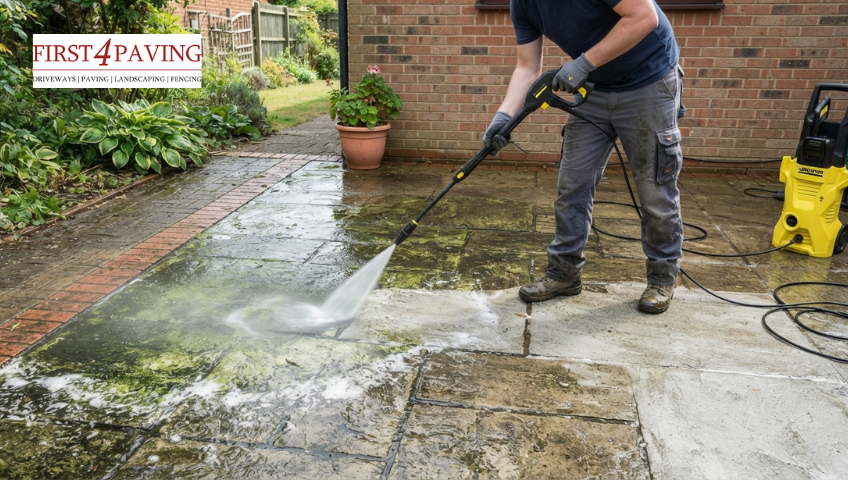
Green algae grows on patio slabs because of trapped moisture, shade, and organic debris sitting on the surface. To stop it, clear away moss and leaves regularly, improve drainage and airflow, clean the slabs with an algae-killing solution or pressure wash, and finish with a breathable sealant to stop spores from taking hold again.
If you’ve noticed slippery green patches creeping across your patio, you’re not alone; it’s one of the most common problems homeowners across Enfield and Hertfordshire ask us about. Algae doesn’t just look unsightly; a damp, shaded patio slab covered in green growth becomes genuinely dangerous underfoot, especially after rain or overnight frost. The good news is that green algae is manageable once you understand why it forms.
In this guide, we’ll walk you through exactly why green algae forms on patio slabs, how to remove it safely without damaging the surface, and the long-term steps that stop it from coming back, covering drainage, airflow, cleaning routines, and sealing, so you get a patio that stays clean season after season, not just for a few weeks.
What Causes Green Algae on Patio Slabs?
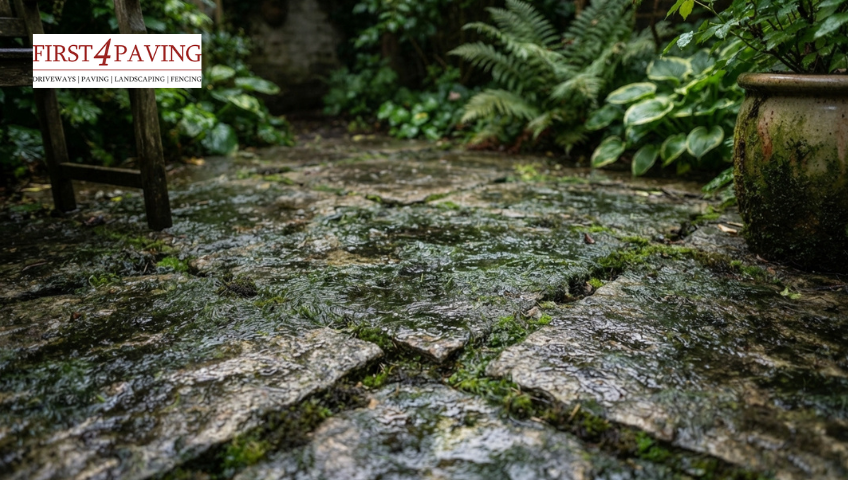
Algae is a simple organism that only needs three things to thrive: moisture, organic matter, and a lack of direct sunlight. Most patios provide all three without the homeowner realising it.
- Patios that don’t drain properly hold rainwater far longer than they should
- Low spots or cracked pointing trap water on the surface
- Slabs laid without the correct fall stop water running off
- Patios under trees or close to fences rarely get enough sun
- North-facing patios often stay damp for days without direct light
- Poor air circulation slows down how quickly the surface dries
- Leaves, grass cuttings, and pollen break down into organic matter
- Bird droppings and dirt add to the build-up over time
- This debris settles into the slab’s porous surface and feeds algae spores
- Natural stone and some concrete slabs are naturally porous — worth bearing in mind when weighing up the best material for a patio if algae resistance is a priority
- Porous surfaces absorb and hold water instead of letting it run off
- Without a sealant, these surfaces are far more prone to algae, moss, and lichen
How to Remove Existing Green Algae on Patio Slabs
Sweep and Clear Debris First
Before treating the algae itself, clear away leaves, moss, and loose dirt with a stiff outdoor brush. This prevents you from spreading organic matter during cleaning and gives any treatment direct contact with the slab surface.
Use a Dedicated Patio Cleaner or Algae Treatment
A specialist patio and algae cleaner (rather than a generic household detergent) is designed to break down algae at the root and is safe for most paving materials. Apply according to the product instructions, leave it to work, then rinse thoroughly.
Pressure Washing: Use It Carefully
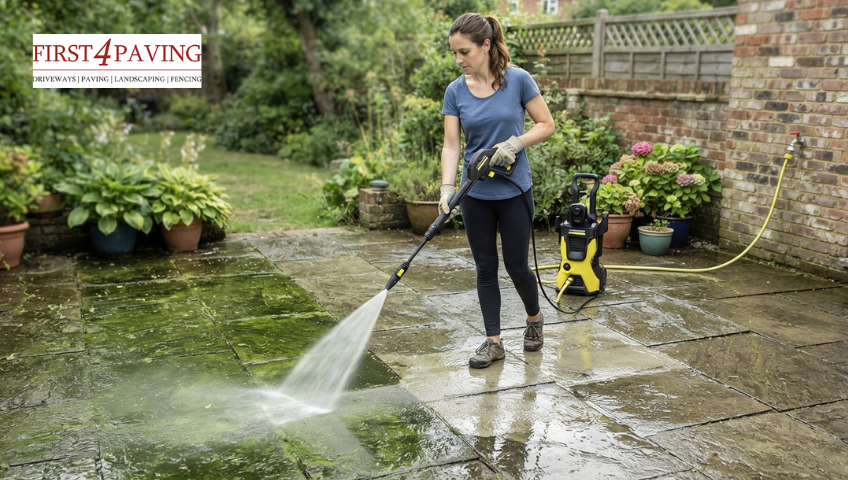
A pressure washer can lift stubborn algae quickly, but you need to use it correctly. Too much pressure or a nozzle too close can damage the slab surface, strip pointing, or push sand out of the joints on block paving, making the area more vulnerable to regrowth. A moderate pressure with a fan nozzle, kept at a consistent distance from the surface, is the safer approach. On a block paving patio, brush fresh jointing sand back into the joints once the surface is dry, which helps stop moss and weeds on block paving from coming back.
A Natural Alternative: White Vinegar or Diluted Bleach
For smaller areas, a solution of white vinegar and water, or heavily diluted bleach, can kill algae effectively. Always rinse thoroughly afterwards and avoid these methods near plants, lawns, or ponds, as they can damage surrounding greenery.
How to Stop Green Algae on Patio Slabs
Stopping algae for good means tackling the conditions that let it grow back, not just cleaning the surface once. As a patio expert in Enfield would tell you, a few consistent habits make the biggest difference over time.
Improve Drainage
Poor drainage is one of the most common reasons algae keeps returning. Check your patio for low spots where water pools after rain, as these damp patches are exactly where algae thrives. If pooling is a recurring issue, have a professional assess the slab fall (the slight slope that lets water run off), since this often points to a base or installation problem rather than something surface cleaning can fix.
Trim Back Overhanging Trees and Shrubs
Shaded patios stay damp for far longer after rain, giving algae the perfect environment to spread. Cutting back branches, hedges, and shrubs that overhang the patio lets more sunlight and airflow reach the surface, which naturally slows regrowth. This is especially worth doing in spring and summer when foliage is at its thickest.
Clean Little and Often
Rather than waiting for algae to build up, a quick sweep and rinse every few weeks stops organic debris, leaves, pollen, and dirt from settling into the surface and feeding future growth. This becomes even more important in autumn, when leaf fall is at its heaviest and debris can build up quickly if left unattended.
Apply a Breathable Sealant
A good-quality, breathable sealant is one of the most effective long-term defences against algae. It stops water from soaking into the surface while still allowing trapped moisture underneath to escape, keeping the slabs drier for longer. For the best results, reapply the sealant every couple of years, as its protective properties gradually wear down with weather exposure and foot traffic.
Repoint or Fill Damaged Joints
Cracked, crumbling, or missing pointing between slabs creates small pockets where moisture collects and lingers. These damp gaps are an easy foothold for algae spores to settle and spread. Repointing or filling damaged joints closes off these entry points and helps keep the whole patio surface more resistant to regrowth.
Keep Furniture and Pots Slightly Raised
Garden furniture, plant pots, and other items sitting flush against the slabs block airflow underneath and create trapped, damp patches that rarely dry out. Raising these items slightly with pot feet or furniture risers lets air circulate and prevents hidden damp spots from becoming algae hotspots.
Avoid Overwatering Nearby Plants and Lawns
Excess water from overwatered lawns, flower beds, or hanging baskets often runs onto nearby patio areas, keeping the surface damp longer than it should. Being mindful of how much you water plants close to the patio, and directing runoff away from paved areas where possible, helps keep the surface drier overall.
Check Gutters and Downpipes
A blocked or poorly positioned downpipe can quietly flood the same section of patio every time it rains, creating a persistent damp patch that’s easy to overlook. Checking that gutters are clear and downpipes are directing water away from the patio, rather than onto it, removes a common but hidden source of recurring algae.
Prevention Tips to Keep Algae From Coming Back
- Sweep the patio regularly to stop leaves and debris settling into the surface
- Keep trees and shrubs trimmed back to maximise sunlight and airflow
- Check drainage after heavy rain and address pooling early
- Reapply a breathable sealant every couple of years
- Keep gutters and downpipes clear so water doesn’t run onto the patio
- Raise furniture and pots slightly to prevent trapped damp patches
- Repoint joints as soon as cracks or gaps appear, rather than waiting
When to Call a Professional
If algae keeps returning no matter how often you clean, it’s often a sign of an underlying drainage or installation issue rather than a surface problem. Uneven falls, poorly bedded slabs, or ageing pointing all create the perfect conditions for algae to keep coming back, and no amount of cleaning will fix that on its own. In some cases, relaying is more cost-effective than repeated treatment, so it’s worth weighing that against new patio installation costs before committing to another round of cleaning.
At First4 Paving, we provide reliable patio services across Enfield and Hertfordshire, and we assess patios for exactly this kind of issue, checking drainage, base condition, and jointing before recommending whether a clean and reseal will do the job, or whether sections need relaying.
If you’re dealing with a patio that keeps growing algae no matter what you try, First4 Paving can help get to the root of the problem and bring it back to how it should look. Contact us today to discuss your patio and get a personalised quote.
Conclusion
Green algae on patio slabs almost always comes down to trapped moisture, shade, and organic build-up, and once you address those root causes, the problem stops coming back. Regular cleaning keeps things looking good in the short term, but drainage, airflow, and a good sealant stop algae from taking hold season after season. If your patio keeps getting green no matter how often you clean it, it’s usually worth having the base and drainage checked rather than repeating the same clean-up every few weeks.
FAQs
How often should I clean algae off my patio?
A light sweep and rinse every few weeks is usually enough, with more frequent attention during autumn when leaf fall is heaviest.
Is pressure washing bad for patio slabs?
Not if it’s done correctly. Too high a pressure or too close a nozzle distance can damage the surface or strip pointing and jointing sand, so a moderate setting with a fan nozzle is safer.
Can I use bleach to remove algae?
Diluted bleach can work on smaller areas, but rinse it thoroughly and keep it away from plants, lawns, and ponds, as it can damage surrounding greenery.
How long does a sealant last on patio slabs?
Most breathable sealants last around two to three years before they need reapplying, depending on weather exposure and foot traffic.
Why does algae keep coming back even after cleaning?
Recurring algae usually points to an underlying issue like poor drainage, shaded conditions, or damaged pointing. Cleaning removes the algae but doesn’t fix the cause.