
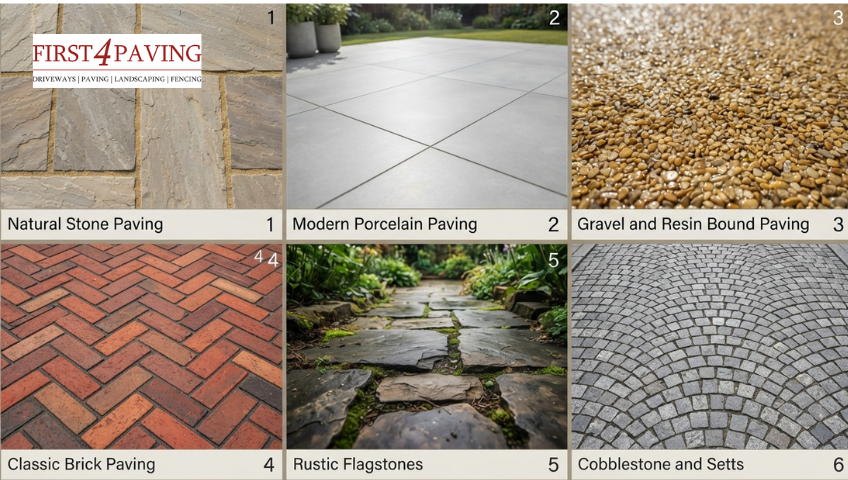
Porcelain paving is generally considered the best patio material overall. It is non-porous, highly weather-resistant, requires minimal maintenance, and can last 20 to 30 years with little upkeep, making it ideal for the UK’s unpredictable climate. That said, the right choice still depends on your budget and style.
A patio is one of the most valuable additions you can make to your outdoor space. It extends your living area, boosts kerb appeal, and can even increase your property’s value. However, the material you choose will determine how your patio looks, how long it lasts, and how much upkeep it demands over the years. With so many options on the market, homeowners often find the decision overwhelming.
In this guide, we walk you through the most popular patio materials used across the UK, looking closely at their advantages, drawbacks, and the situations they suit best, so you know exactly which option is right for your home.
Types of Patio Materials for UK Homes
1. Natural Stone Paving
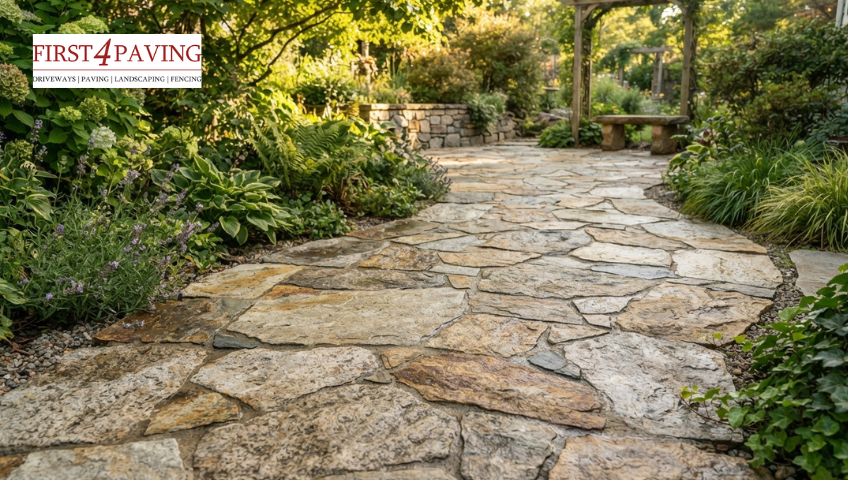
Natural stone, such as Indian sandstone, limestone, or granite, remains one of the most sought-after choices for UK homeowners who want a premium, timeless finish. Its natural origins mean every patio has a distinct character, making it a popular choice for those who want their outdoor space to feel truly one of a kind. It also tends to age gracefully, developing a subtle patina that many homeowners find adds to its charm over time.
Advantages:
- Unique, natural variation in colour and texture, meaning no two slabs are identical
- Extremely durable, often lasting 20 years or more with proper care
- Adds significant kerb appeal and property value
- Available in a wide range of finishes, including riven, honed, and tumbled
Considerations:
- Higher upfront cost compared to concrete or gravel
- May require periodic sealing to prevent staining and moss growth
- Some stones, such as sandstone, can be porous and prone to weathering if untreated
2. Porcelain Paving
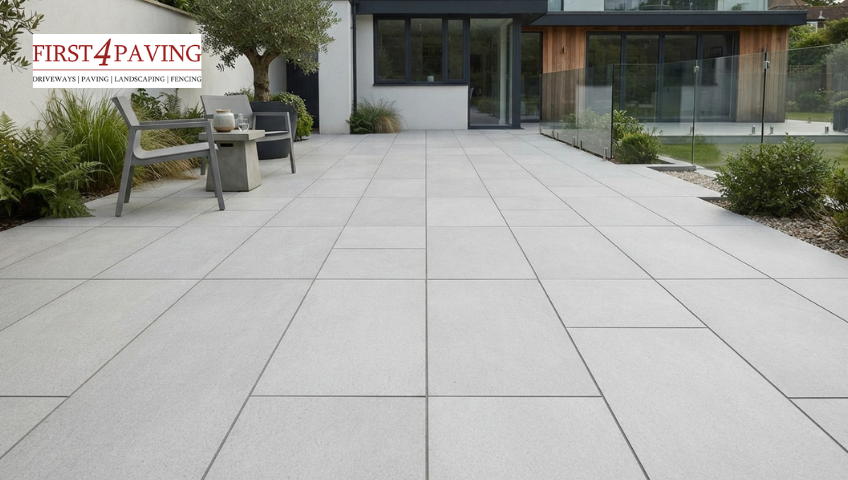
Porcelain has surged in popularity in recent years, and for good reason. It combines a high-end appearance with practical, low-maintenance performance. Manufactured under controlled conditions, it offers a level of consistency and precision that natural materials can’t match, making it a favourite among homeowners who want a clean, contemporary finish without compromising durability.
Advantages:
- Non-porous, so it resists staining, frost damage, and algae — a real advantage over more porous surfaces where stopping green algae on patio slabs becomes an ongoing task
- Extremely low maintenance, as a quick wash keeps it looking new
- Consistent colour and finish, ideal for a modern, uniform look
- Slip-resistant options available for pool areas and wet conditions
Considerations:
- Higher initial cost, similar to or above natural stone
- Requires precise installation, so professional fitting is recommended
- Limited natural texture variation compared to stone
3. Gravel and Resin Bound Surfaces
For homeowners wanting a more informal or contemporary look, gravel and resin-bound patios offer flexibility and fast installation. These surfaces work particularly well for irregular or curved layouts where rigid materials would be more difficult and costly to install, and they can be a practical solution for homeowners looking to update their outdoor space without a lengthy project timeline.
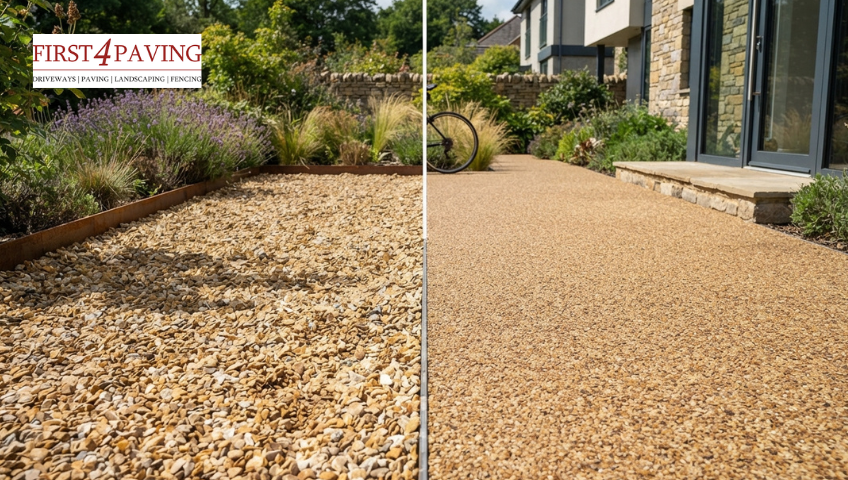
Advantages:
- Among the most affordable patio options
- Quick and straightforward to install
- Resin-bound surfaces are permeable, aiding drainage and reducing puddling
- Easy to adapt to curved or irregular patio shapes
Considerations:
- Loose gravel can migrate and requires occasional top-ups
- Not ideal for high heels, wheelchairs, or pushchairs
- Resin surfaces may need resealing every few years to maintain appearance
4. Brick Paving
Brick paving brings a warm, traditional character that suits period properties and cottage style gardens particularly well. Its rich, earthy tones and familiar texture make it a natural fit for homes looking to preserve a classic aesthetic, and it pairs especially well with traditional planting schemes and period architectural features.
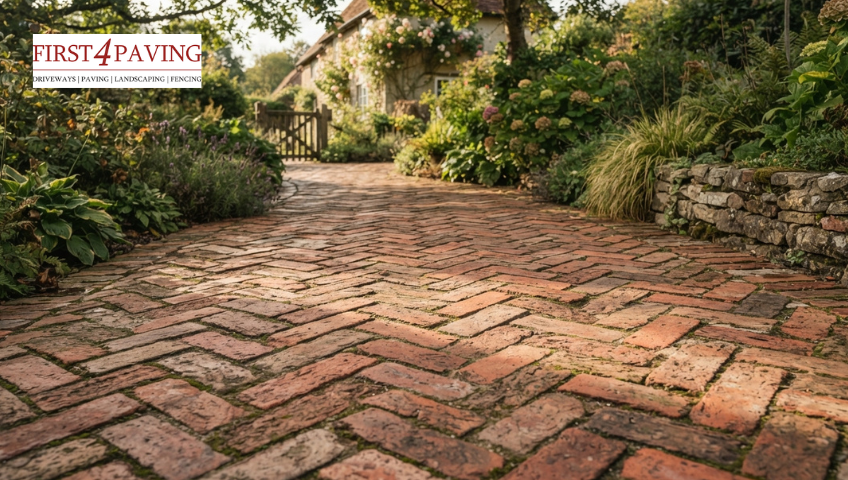
Advantages:
- Classic, timeless appearance that complements traditional and period homes
- Strong and durable when properly laid
- Individual bricks can be replaced if damaged, without redoing the whole patio.
- Wide range of laying patterns, such as herringbone or basketweave
Considerations:
- More expensive and labour-intensive to install than concrete block paving
- Porous surface that can absorb stains and support moss or weed growth
- May require re-pointing over time to keep joints secure
5. Flagstones
Flagstones, including limestone and slate, sit within the natural stone family but offer a distinct texture and finish compared to sandstone or granite. Their smoother, more refined surface gives them a slightly more formal appearance, making them a popular choice for homeowners seeking an elegant, polished look without straying from natural materials.
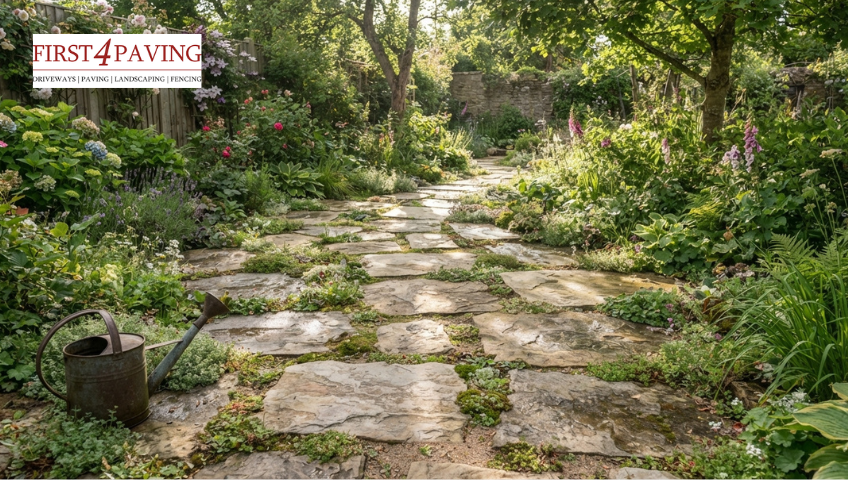
Advantages:
- Elegant, refined appearance with a smoother or more uniform surface than riven stone
- Highly durable and long-lasting when sealed correctly
- Available in a range of natural tones to suit different garden styles
- Adds a premium, high-end feel to outdoor spaces
Considerations:
- Can be slippery when wet if not treated with a suitable finish
- Higher cost compared to concrete or gravel
- Requires professional installation for a level, secure finish
6. Cobblestone and Setts
Cobblestone and granite setts offer a rustic, old-world aesthetic that works particularly well for driveways, borders, or accent areas within a larger patio. Their irregular, textured surface adds a strong sense of character and history to outdoor spaces, and they are often chosen to create a striking contrast when paired with smoother, more contemporary materials. If you’re considering them purely as a border, browsing a few driveway edging ideas can help translate the same look to a patio edge.
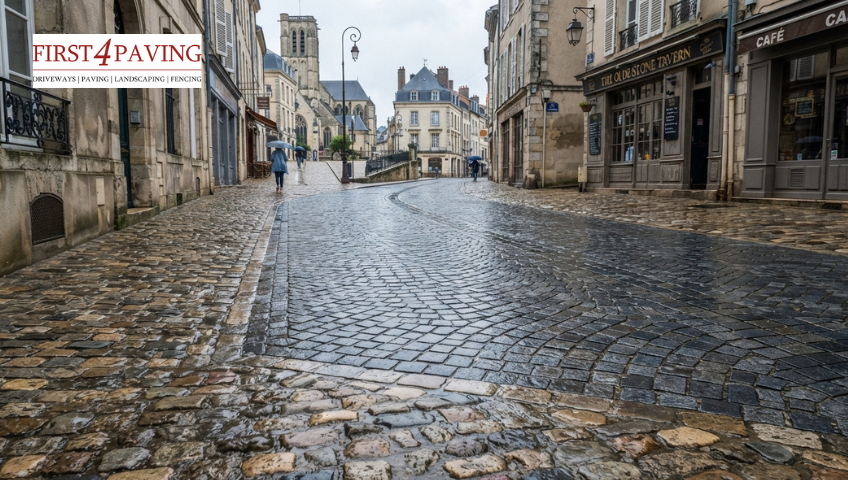
Advantages:
- Distinctive, characterful look that adds texture and visual interest
- Extremely hard-wearing and able to withstand heavy loads
- Resistant to cracking and weather damage
- Often used to complement other materials as an edging or feature
Considerations:
- Uneven surface can make it less comfortable for furniture or bare feet
- Among the more expensive options due to labour-intensive installation
- Not ideal as the sole material for a large, functional seating patio
Best Patio Materials Compared
When comparing the best patio materials, our patio experts in Enfield consider several key factors: durability, cost, maintenance, and weather performance
- Porcelain Paving: Best for long-term durability and low maintenance
- Natural Stone: Best for premium, classic appearance
- Concrete Block Paving: Best budget-friendly option
- Gravel/Resin Bound: Best for quick installation and flexible layouts
- Brick Paving: Best for traditional and period style homes
Each system has its place depending on the property type and homeowner expectations. If you are unsure about your budget, it helps to understand how much a new patio costs before making a final decision.
Patio Material Cost, Lifespan & Maintenance Comparison
| Material | Average Cost (per m²) | Lifespan | Maintenance Level | Best For |
| Porcelain | £70–£110 | 20–30 years | Very low | Overall best choice, modern homes, low upkeep |
| Natural Stone | £60–£100 | 20–25+ years | Moderate (periodic sealing) | Period homes, premium finish |
| Gravel/Resin Bound | £30–£60 | 10–15 years | Moderate (top ups/resealing) | Informal gardens, quick installs |
| Brick Paving | £50–£90 | 15–20 years | Moderate (re-pointing) | Traditional, cottage-style homes |
| Flagstones | £65–£110 | 20–25+ years | Moderate (sealing) | Elegant, high-end patios |
| Cobblestone/Setts | £70–£120 | 25+ years | Low | Accent areas, driveways, edging |
Note: Prices are approximate and can vary depending on region, supplier, and installation complexity. Always request a personalised quote for accurate figures.
Key Factors for Choosing a Patio Material
Choosing the right patio material really matters. It helps protect your outdoor space and can save you money over time. Here are a few important things you should keep in mind:
- Price vs Quality: Lower cost doesn’t always mean better value. Stronger materials reduce future costs.
- Weather Resistance: In wet or changing climates, use non-porous materials to lower the risk of frost damage and staining.
- Property Fit: Pick a material that suits your home. Period properties work best with natural stone or brick, while modern homes suit porcelain.
- Maintenance Level: Less upkeep means saving time and money in the long run.
Professional Patio Installation
A high-quality installation matters as much as the material itself. Poor artistry can lead to uneven surfaces, drainage issues, and costly repairs. Working with experienced installers who specialise in patio paving services ensures that every layer is laid correctly, using the right techniques for long-term performance.
At First4 Paving, we deliver complete patio services with attention to detail and high-quality materials, ensuring strong, reliable, and weather-resistant results for every project.
Contact us today for a free, no-obligation consultation. Our team will guide you through every step, from choosing the perfect material to a flawless installation, so you can start enjoying your new patio sooner than you think.
Conclusion
Choosing the best patio material ultimately comes down to balancing your budget, maintenance preferences, and the look you want to achieve. Natural stone, porcelain, and flagstones offer premium durability and aesthetics for those willing to invest, while concrete block paving, gravel, and brick provide practical, cost-effective alternatives. Whichever material you choose, professional installation is key to ensuring your patio stands up to time and weather. With the right guidance, your new patio can become one of the most rewarding upgrades to your home.
FAQs
What is the most durable patio material?
Natural stone, porcelain, flagstones, and cobblestone are generally considered the most durable, often lasting 20 years or more with proper installation and care.
Which patio material requires the least maintenance?
Porcelain paving is the lowest-maintenance option, as it is non-porous and highly resistant to staining, frost, and algae growth.
What is the cheapest patio material?
Gravel and concrete block paving tend to be the most budget-friendly options, both for material cost and installation.
Can I lay a patio myself, or should I hire a professional?
While some materials like gravel are DIY-friendly, natural stone, porcelain, brick, and flagstones require precise levelling and jointing, so professional installation is strongly recommended for a long-lasting result.
How long does a patio installation typically take?
Most residential patios take between 2 and 5 days to install, depending on the size, material, and any groundwork required.